Split Systems With Gas Furnaces
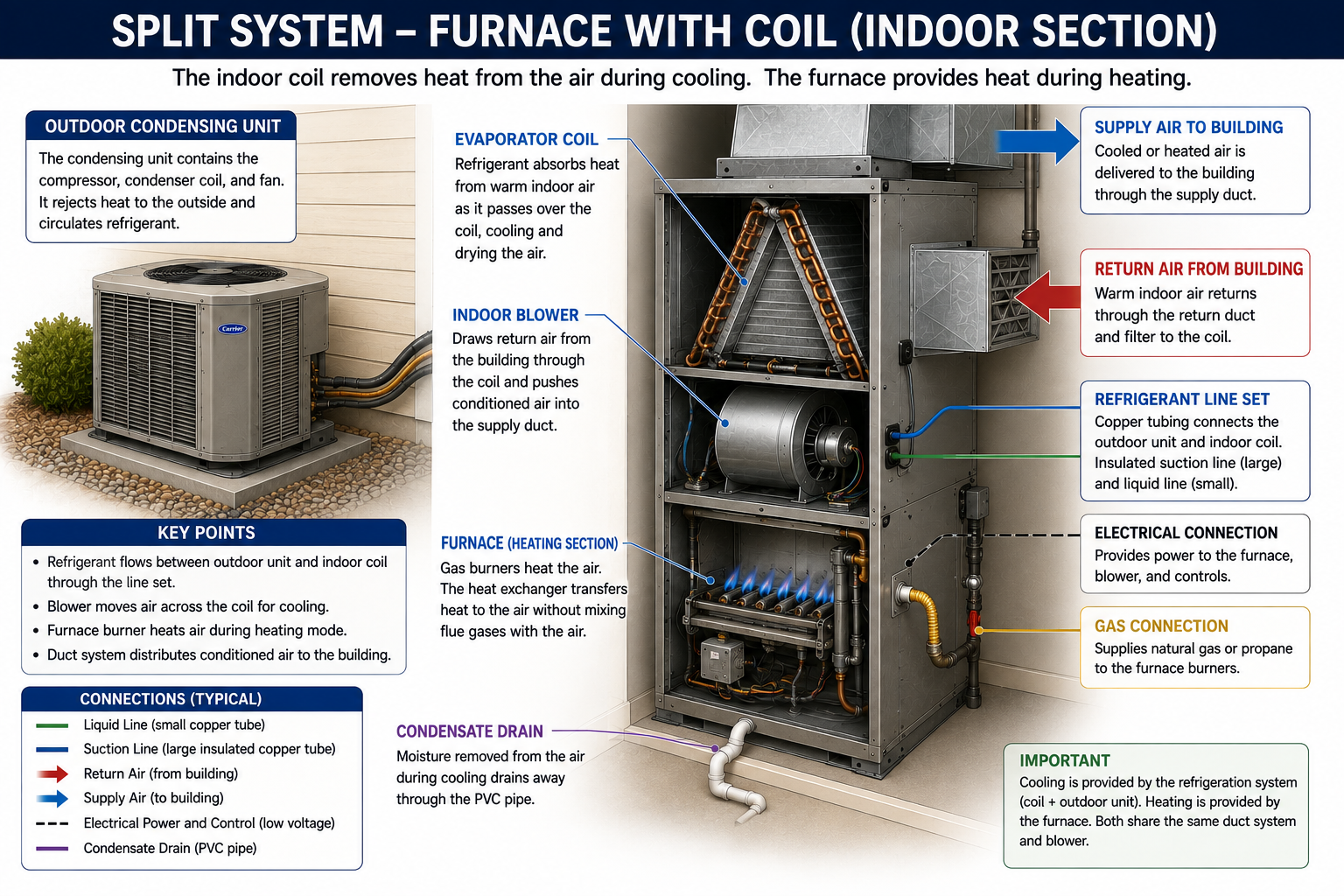
A conventional split air-conditioning system does not always use an air handler for its indoor equipment. In many homes and other buildings, the indoor evaporator coil is installed with a gas furnace. The furnace provides the blower needed to circulate air during both heating and cooling, while the evaporator coil provides the indoor heat-transfer surface for the air-conditioning system.
This configuration is especially important for technicians to recognize because the furnace and air conditioner are separate systems that share the same blower and ductwork. In this lesson, we will examine a typical upflow gas furnace with a cased evaporator coil installed above it and compare that arrangement with the air-handler system covered in Lesson 4.
Learning Objectives
Recognize the Furnace/Coil Configuration
Identify a conventional split air-conditioning system that uses an outdoor condensing unit, indoor evaporator coil, and gas furnace.
Follow Upflow Air Movement
Trace building air through the return, filter, furnace blower, evaporator coil, and supply duct in a typical upflow installation.
Separate Heating and Cooling Functions
Understand how the furnace provides gas heat while the evaporator coil and outdoor condensing unit provide mechanical cooling.
Compare Furnaces and Air Handlers
Recognize the important differences between a furnace/evaporator-coil combination and the air-handler configuration covered in Lesson 4.
Two Systems Share the Indoor Airflow Equipment
In this split-system arrangement, the outdoor condensing unit is connected by refrigerant piping to an evaporator coil installed with the gas furnace. The evaporator coil does not need its own separate blower because the furnace blower moves air through the coil during cooling operation.
The gas furnace and air-conditioning system therefore perform different heating and cooling functions while sharing important parts of the air-distribution system. The furnace blower operates during both heating and cooling, and the same supply and return ducts distribute air throughout the building.
The Condensing Unit Remains Outside
The outdoor portion of this system is essentially the same type of condensing unit encountered with the air-handler split system in Lesson 4. It contains the outdoor refrigeration equipment and is connected to the indoor evaporator coil by the refrigerant line set.
During cooling, the outdoor unit rejects heat that the refrigeration system has absorbed from the building. The presence of a gas furnace indoors does not change the fundamental vapor-compression refrigeration cycle.
The Refrigeration Cycle Has Not Changed
The compressor, condenser, metering device, and evaporator continue to perform the functions already covered in The Basic Refrigeration Cycle. The important difference in this lesson is how the indoor evaporator and air-moving equipment are physically arranged.
The Cooling Coil Is Installed With the Furnace
A common residential installation uses a cased evaporator coil. The coil and condensate drain pan are contained in their own cabinet, which is installed in the air path immediately adjacent to the furnace.
In the upflow arrangement illustrated here, the cased evaporator coil is installed directly above the furnace. The furnace blower pushes air upward through the evaporator coil during cooling operation.
The refrigerant line set from the outdoor condensing unit connects to the evaporator-coil assembly. Condensate produced during cooling collects in the drain pan beneath the coil and leaves through the condensate drain connection at the base of the evaporator-coil section.
The Coil Requires Condensate Drainage
When moisture condenses on the cold evaporator coil, it falls into the drain pan beneath the coil. The condensate drainage system must remove this water from the coil assembly. The drain is associated with the evaporator-coil section, not with the bottom of the furnace cabinet.
The Furnace Provides the Blower and Heating Section
The gas furnace performs two important functions in this combined installation. During heating operation, it provides gas-fired heat. During both heating and cooling operation, its blower moves air through the building’s forced-air distribution system.
In a typical upflow furnace, return air enters the lower portion of the furnace near the blower compartment. The blower then pushes the air upward through the furnace and into the cased evaporator coil installed above it.
Blower Compartment
The blower is located in the lower portion of the typical upflow furnace and moves building air through the furnace, evaporator coil, and duct system.
Gas Heating Section
The furnace contains the burners, heat exchanger, controls, and other equipment required to provide gas-fired heating.
Shared Airflow
The furnace blower serves both systems. It moves air across the furnace heat exchanger during heating and through the evaporator coil during cooling.
Shared Ductwork
The heating and cooling systems use the same building return and supply ducts to circulate conditioned air.
Airflow Through an Upflow Furnace and Coil
The word upflow describes the direction of building air through the furnace. Return air enters near the bottom of the equipment and the blower moves the air upward toward the supply duct.
In the arrangement used in this lesson, return air enters through the return duct and passes through the filter before entering the blower compartment. The blower then pushes the air upward through the furnace and the cased evaporator coil before the air enters the supply duct.
Return Air
Air from the conditioned building returns to the equipment through the return duct near the bottom of the upflow furnace.
Filter
The return air passes through the filter before entering the furnace blower compartment.
Blower
The furnace blower pulls air from the return side and pushes it upward through the indoor equipment.
Furnace
The air moves through the furnace. During gas heating operation, heat is transferred from the furnace heat exchanger to the building air.
Evaporator Coil
The air then passes upward through the evaporator coil. During cooling operation, heat and moisture are removed from the building air.
Supply Air
After passing through the indoor equipment, the conditioned air enters the supply duct and is distributed throughout the building.
The Furnace Blower Serves the Air Conditioner
During a call for cooling, the gas burners are not providing the cooling. The outdoor condensing unit and indoor evaporator coil operate as the mechanical refrigeration system, while the furnace blower provides the airflow needed to move building air through the evaporator coil.
Return air enters the furnace, passes through the filter, and is moved upward by the blower. As the air passes through the cold evaporator coil, heat is transferred from the air to the refrigerant and moisture may condense from the air. The cooled and dehumidified air then enters the supply duct.
The Furnace Is Still Important During Cooling
Even though the gas heating section is not producing heat during normal cooling operation, the furnace is still part of the air-conditioning installation because its blower moves the required airflow through the evaporator coil and duct system.
The Furnace Provides the Heat
During a call for gas heat, the furnace heating section operates and the blower moves building air across the furnace heat exchanger. Heat from combustion is transferred through the heat exchanger to the building air.
The heated air continues upward through the cased evaporator-coil section and into the supply duct. The evaporator coil is physically in the airflow path, but the air-conditioning refrigeration system is normally not operating to provide cooling during a conventional gas-heating call.
The furnace and evaporator coil therefore remain physically connected throughout the year even though different equipment provides the actual heating and cooling.
During gas heating: the furnace provides both the heat and the blower airflow.
The Line Set Connects to the Evaporator Coil
The refrigerant line set runs between the outdoor condensing unit and the indoor evaporator coil. It does not connect to the gas-heating portion of the furnace because the furnace is not part of the refrigerant circuit.
In a conventional split air-conditioning installation, the line set consists of two refrigerant tubes. The larger vapor line is normally insulated, while the smaller liquid line is normally not insulated.
For Detailed Line-Set Information
Line sizing, insulation, equivalent length, oil return, fittings, brazing, pressure testing, evacuation, and other installation requirements are covered in Refrigerant Line Sets in Split Systems.
Compare the Two Split-System Arrangements
Lessons 4 and 5 demonstrate two common ways of arranging the indoor portion of a ducted split air-conditioning system. Both use an outdoor condensing unit, refrigerant piping, an indoor evaporator coil, a blower, and central ductwork. The major difference is the type of indoor equipment providing the blower and heating functions.
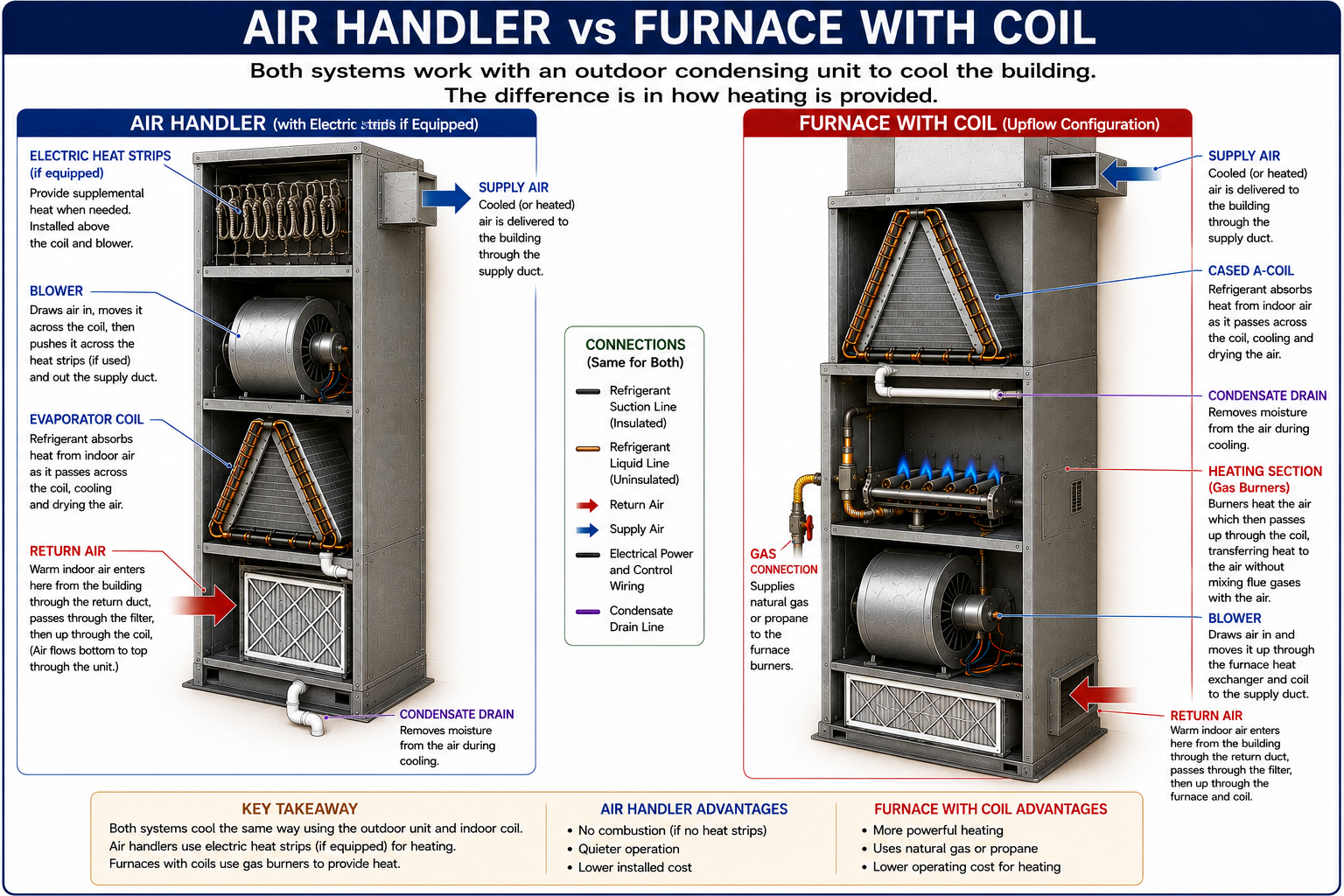
| Characteristic | Air Handler | Gas Furnace + Evaporator Coil |
|---|---|---|
| Outdoor Condensing Unit | Yes | Yes |
| Indoor Evaporator Coil | Contained within air-handler assembly | Separate cased or uncased coil installed with furnace |
| Indoor Blower | Air-handler blower | Furnace blower |
| Gas Heating Section | No | Yes |
| Electric Resistance Heat | May be installed | Not normally the primary heating method in this configuration |
| Central Ductwork | Yes | Yes |
| Refrigerant Line Set | Connects outdoor unit to air-handler evaporator | Connects outdoor unit to evaporator coil above furnace |
| Condensate Drain | At evaporator-coil drain pan | At evaporator-coil drain pan |
What Should You Look For?
Outdoor Condensing Unit
Look for a separate outdoor condensing unit connected to the indoor equipment by refrigerant piping.
Gas Furnace Indoors
Look for a furnace with a gas supply, combustion venting, and the components associated with gas-fired heating.
Cased Coil Above the Furnace
In a typical upflow installation, the evaporator coil is contained in a separate cabinet mounted directly above the furnace.
Two Refrigerant Lines
The line set connects the outdoor condensing unit to the evaporator coil rather than to the gas-heating section of the furnace.
Condensate Drain at the Coil
Look for condensate piping leaving the drain-pan area at the base of the evaporator-coil cabinet.
One Shared Duct System
The furnace and air-conditioning system use the same return duct, blower, supply duct, and building air-distribution system.
Avoid These Identification Mistakes
“The Furnace Provides the Cooling”
Incorrect. The refrigeration system provides cooling. The furnace blower moves the building air through the evaporator coil.
“The Evaporator Coil Is Part of the Furnace”
Not in the refrigeration sense. The coil may be physically installed directly on the furnace, but it is the indoor heat exchanger of the air-conditioning system.
“The Refrigerant Lines Connect to the Furnace”
Incorrect. The refrigerant lines connect to the evaporator coil installed with the furnace.
“The Furnace Is Off During Cooling”
Only the gas-heating function is inactive. The furnace blower must operate to move air through the evaporator coil during cooling.
“An Air Handler and Furnace Are the Same Thing”
Incorrect. They can serve similar air-moving functions, but a gas furnace contains gas-fired heating equipment while an air handler does not.
“The Condensate Drain Comes From the Furnace”
During air-conditioning operation, condensate is produced at the evaporator coil and collected in the coil drain pan.
Review Questions
1. What are the three major equipment assemblies in the split-system configuration covered in this lesson?
Answer: The outdoor condensing unit, indoor evaporator coil, and gas furnace.
2. Where is the evaporator coil located in the typical upflow installation shown in this lesson?
Answer: The cased evaporator coil is installed directly above the upflow gas furnace.
3. What moves air through the evaporator coil during cooling?
Answer: The blower contained in the gas furnace moves the building air through the evaporator coil.
4. What is the typical airflow sequence through the upflow furnace and coil arrangement?
Answer: Return duct → filter → blower → furnace → evaporator coil → supply duct.
5. Does the refrigerant line set connect to the gas-heating section of the furnace?
Answer: No. The refrigerant line set connects the outdoor condensing unit to the indoor evaporator coil.
6. Where should you expect to find the air-conditioning condensate drain?
Answer: At the evaporator-coil drain pan, typically near the base of the cased coil in the upflow arrangement shown here.
7. What does the furnace contribute during normal cooling operation?
Answer: The furnace provides the blower that moves return air through the evaporator coil and into the supply duct. The gas burners do not provide the cooling.
8. What is the major difference between the indoor equipment in Lesson 4 and Lesson 5?
Answer: Lesson 4 uses an air handler containing its own blower and evaporator coil. Lesson 5 uses a gas furnace blower with a separate evaporator coil installed above the furnace.
Lesson 5 Summary
- A conventional split air-conditioning system can use a gas furnace as the indoor air-moving equipment instead of using a separate air handler.
- The outdoor condensing unit connects by refrigerant piping to an indoor evaporator coil installed with the furnace.
- In a common upflow configuration, the cased evaporator coil is installed above the gas furnace.
- The furnace blower moves building air during both heating and cooling operation.
- During cooling, the refrigeration system removes heat and moisture from the building air while the furnace blower provides the required airflow.
- During gas heating, the furnace provides the heat and the blower moves heated air through the same duct system.
- The refrigerant line set connects to the evaporator coil, not to the gas-heating portion of the furnace.
- Condensate produced during cooling is collected beneath the evaporator coil and removed through the coil’s condensate drainage system.
- In the typical upflow arrangement discussed here, the airflow sequence is return duct → filter → blower → furnace → evaporator coil → supply duct.
- An air handler and a gas furnace are different types of indoor equipment even though both can provide the blower needed for a central duct system.
- The furnace and air-conditioning system are separate systems that share the blower and building ductwork.