Sometimes medical issues announce themselves with symptoms. Other times, they are discovered almost by accident. In my case, a bladder tumor was found because doctors were looking at something else.
During an unrelated CT scan looking for fragments of an IVC filter that was removed a year ago, an abnormal area involving the bladder was noticed by a sharp eyed Radiologist. It was not the reason for the scan, but it was significant enough that it needed to be investigated further. A follow-up scan continued to show the abnormality, which led to a referral to urology.
Getting a Direct Look
The next major step was a cystoscopy, a procedure in which a small camera is passed through the urinary tract (Very OUCH!) so the urologist can look directly inside the bladder. CT imaging can show that something appears abnormal, but the cystoscopy provided a much clearer answer.
There was a tumor in the bladder and it was starting to block one of the urinary tracts from a kidney.
Once the tumor was actually seen, the process moved fairly quickly. Rather than continuing to watch it or spending a long time on additional testing before treatment, the priority became getting into surgery and removing the tumor so that it could be sent to pathology.
Surgery
I had surgery on September 8, 2026, to remove the bladder tumor. The procedure went well. The surgeon’s initial impression afterward was that she was able to remove what she could see and did not have to go deeply into the bladder muscle. That is encouraging, but the important answers will come from pathology.
While I was still in surgery, chemotherapy medication was placed directly into the bladder. This is intravesical chemotherapy, meaning the medication is delivered locally inside the bladder rather than being given as systemic chemotherapy through an IV.
For now, there is no point in getting too far ahead of the pathology report. That report should provide the information needed to determine exactly what the tumor was, its grade and depth, and whether additional treatment or surveillance will be necessary.
The Immediate Recovery
I came home after surgery with a urinary catheter and collection bag. The current plan is to keep the catheter in place until Monday, September 14.
I am off work during the initial recovery period. The current plan allows me to return to work on September 14 on desk duty only. Assuming recovery continues normally, I am scheduled to return to full duty on September 22.
Those dates give me a basic framework for the physical recovery, but the larger medical picture will become clearer once the pathology results are available.
An Unexpected Detour
The remarkable part of this experience is how it started. Nobody ordered that original CT scan because they were specifically looking for a bladder tumor. Something unexpected appeared on imaging, the doctors followed up on it, the cystoscopy confirmed what was actually there, and the response shifted quickly from investigation to getting it removed.
There are still unanswered questions, and pathology will determine what happens next. But as of today, the tumor has been removed, the first treatment has been given, and recovery has begun.
For now, that is enough of the story to tell. The next chapter can wait until there is actual information to put in it.
Today was not intended to be a pace-setting workout, a race simulation, or another fitness test. I simply wanted to get into the pool one more time before taking a short break from swimming.
The result was a 2,500-meter mixed freestyle and breaststroke session that stayed comfortably on the moderate side. After the stronger training block I completed during the first week of September, that was exactly what I wanted from today’s swim.
Today’s Workout
Metric
Result
Distance
2,500 m
Swimming Time
44:09
Average Pace
1:47 / 100 m
Normalized Pace
1:46 / 100 m
Average Heart Rate
124 bpm
Maximum Heart Rate
152 bpm
sTSS
55
Intensity Factor
0.91
Calories
611
The stroke distribution was almost perfectly balanced, with 1,200 meters of freestyle and 1,300 meters of breaststroke. That made this a good general swimming session rather than another workout centered around one particular race.
Not Every Swim Needs to Be a Test
One of the challenges as Huntsman gets closer is resisting the urge to turn every good opportunity to swim into another test. There is always a temptation to see whether I can hold race pace longer, swim another fast 200, or improve one of my current training benchmarks.
That was not today’s objective.
I wanted to swim, move through both of my primary strokes, and leave the pool without creating another major recovery demand. The 55 sTSS, 0.91 intensity factor, and average heart rate of 124 bpm suggest that I kept the overall session where it belonged.
Freestyle Speed Was Still Available
Even though I wasn’t trying to establish a freestyle pace today, the workout still showed that my normal freestyle speed was available when I wanted it.
Across the 1,200 meters of freestyle, the moving pace averaged approximately 1:36 per 100 meters. There was also a standalone 100-meter freestyle in 1:31.59, while a later three-repeat 100-meter freestyle set averaged approximately 1:37 per 100 meters.
I don’t consider any of those numbers new benchmarks. Rest periods, stroke changes, and the overall structure of the workout make them very different from a continuous race-distance swim. They simply confirm the pattern I’ve been seeing throughout September: short-duration freestyle speed is not currently the limiting factor.
Breaststroke Stayed Controlled
The 1,300 meters of breaststroke were considerably more relaxed than my dedicated breaststroke-endurance sessions. The overall moving pace was approximately 1:55 per 100 meters.
That was appropriate for today’s purpose. I wasn’t trying to reproduce my 200-meter breaststroke training pace or create another endurance-under-fatigue test. I simply wanted enough breaststroke volume to maintain the feel of the stroke without turning the session into another hard workout.
Where the Race Benchmarks Remain
Because today’s workout wasn’t designed as a race test, none of my current Huntsman benchmarks change.
Event
Current Training Benchmark
1500 Freestyle
24:04.84
800 Freestyle
12:40.25
200 Breaststroke
3:27.54
Those remain the numbers that matter when I evaluate my progress toward Huntsman. Today’s swim belongs in a different category: a moderate training session that closed out the current block.
September Training So Far
Date
Pool Distance
September Total
Sep. 1
1,800 m
1,800 m
Sep. 2
2,500 m
4,300 m
Sep. 3
2,700 m
7,000 m
Sep. 4
2,500 m
9,500 m
Sep. 5
3,400 m
12,900 m
Sep. 6
Non-pool workout
12,900 m
Sep. 7
2,500 m
15,400 m
That brings September to 15,400 meters of swimming and 359 swim sTSS through today.
More important than the total distance, the first week of September included recovery work, breaststroke endurance, freestyle endurance, a continuous 1,500-meter effort, mixed aerobic training, and today’s moderate closing swim.
Closing This Training Block
I am going to consider today’s swim the end of this particular training block.
There is no reason to try to make up meters while I am away from the pool, and there is no benefit in trying to preserve the original September schedule exactly. When I return, the better approach will be to look at how much time I actually spent out of the water and then build the next block from there.
The fitness I’ve developed over the past several weeks isn’t going to disappear because of a short interruption. The important thing will be returning intelligently rather than trying to immediately recover everything I didn’t swim.
30 Days to Huntsman
There are now 30 days until the 200-meter breaststroke on October 7, followed by the 800-meter freestyle on October 8 and the 1,500-meter freestyle on October 9.
Today’s swim didn’t produce a new race benchmark, and it wasn’t supposed to. It accomplished something simpler: 2,500 meters of comfortable swimming, equal attention to freestyle and breaststroke, and one final opportunity to feel good in the water before stepping away for a little while.
Sometimes the best workout is the one that does exactly what it was intended to do.
After five consecutive days in the pool, today was a non-pool training day. With the Huntsman World Senior Games now only 31 days away, recovery is becoming just as important as the workouts themselves.
September has started with a very solid block of swimming. From Tuesday through Saturday I swam 12,900 meters, with workouts covering recovery and technique, breaststroke endurance, freestyle endurance, and longer aerobic work. Saturday finished the block with 3,400 meters and included a continuous 1,500-meter freestyle in 24:26.35.
That made today a good time to stay out of the pool and allow some of that work to be absorbed rather than immediately adding another swimming session.
Today’s Training
Today was not a complete inactivity day, but it was deliberately a non-pool workout. The objective was simple: remain active without adding another swimming load after five straight days in the water.
At this stage of preparation, I don’t need every day to produce another impressive number on the training log. There is a difference between continuing to train and simply accumulating fatigue. Today’s workout was about the former.
What the First Five Days of September Accomplished
Date
Distance
Primary Focus
Sep. 1
1,800 m
Recovery & technique
Sep. 2
2,500 m
Freestyle aerobic / breaststroke
Sep. 3
2,700 m
200 breaststroke endurance
Sep. 4
2,500 m
800/1500 freestyle endurance
Sep. 5
3,400 m
Long mixed aerobic
Total
12,900 m
Five consecutive swim days
The important part of that block isn’t simply the 12,900 meters. There were several encouraging indicators within those workouts.
Breaststroke endurance remained consistent through longer 100- and 150-meter repeats.
Freestyle speed continued to be available even late in workouts.
The 800- and 1,500-meter freestyle work continued to show that pacing consistency is a bigger opportunity than finding additional raw speed.
Saturday’s continuous 1,500-meter freestyle provided another useful endurance benchmark without being a dedicated time trial.
The 1,500-Meter Picture
Saturday’s 24:26.35 continuous 1,500-meter freestyle works out to approximately 1:37.76 per 100 meters. My best current training time remains the 24:04.84 I swam on August 23, or approximately 1:36.32 per 100 meters.
The difference between the two swims is only 21.51 seconds over 1,500 meters, or about 1.43 seconds per 100 meters. Since Saturday’s swim opened a larger 3,400-meter training session rather than being treated as a dedicated 1,500-meter time trial, I consider it a good secondary endurance benchmark rather than a replacement for the August 23 performance.
1500 Freestyle – Current Comparison
Benchmark
Time
Pace / 100 m
2025 Silver
23:39.43
1:34.63
Training Best
24:04.84
1:36.32
Sep. 5 Endurance
24:26.35
1:37.76
2025 Bronze
25:04.75
1:40.32
2025 4th
25:06.88
1:40.46
Saturday’s swim was 46.92 seconds behind the 2025 silver-medal time but still 38.40 seconds faster than the 2025 bronze-medal time. My August 23 training best remains considerably closer to silver.
Speed Isn’t the Main Problem
One theme has become increasingly obvious during the first week of September: I can swim considerably faster than my required 800- and 1,500-meter pace for short periods. The challenge is distributing that speed efficiently over the entire race.
Saturday provided another example. After swimming the continuous 1,500, I still produced freestyle 100s of 1:32.18 and 1:30.50. Later, the 10 × 50 freestyle set averaged approximately 1:29 per 100-meter equivalent pace. The speed was there, but the 50s gradually slowed from 40.73 to 46.02.
That tells me I probably have more to gain by narrowing the difference between my fastest and slowest repetitions than by trying to make the fastest repetitions even faster. Over 800 or 1,500 meters, controlled speed that can be sustained is much more useful than an exceptionally fast opening followed by a gradual fade.
Recovery Is Part of Training
It can be difficult to stay out of the pool when training is going well. There is always another set that could be completed and another few hundred meters that could be added to the monthly total.
But the objective isn’t to arrive at Huntsman having accumulated the largest possible number of training meters. The objective is to arrive prepared to swim the 200 breaststroke, 800 freestyle, and 1,500 freestyle as well as I can.
That requires hard workouts, endurance work and race-specific preparation, but it also requires days when I allow the training I’ve already completed to do its job.
September Training Ledger
Date
Pool Distance
September Total
Sep. 1
1,800 m
1,800 m
Sep. 2
2,500 m
4,300 m
Sep. 3
2,700 m
7,000 m
Sep. 4
2,500 m
9,500 m
Sep. 5
3,400 m
12,900 m
Sep. 6
Non-pool
12,900 m
September currently stands at 12,900 meters of swimming. More importantly, those meters have included useful work for all three of my primary Huntsman events rather than simply accumulating distance.
Tomorrow: Rest
Monday will be a rest day. No pool workout and no attempt to make up meters.
That gives me two days away from swimming after the five-day opening block of September. At 31 days from the first day of competition, I’m far enough into the preparation that protecting the quality of the work ahead matters more than squeezing another workout into every available day.
31 Days to Huntsman
There are now 31 days until the 200-meter breaststroke on October 7. The 800-meter freestyle follows on October 8, and the 1,500-meter freestyle on October 9.
The first five days of September gave me a good block of training and another useful look at where I stand. The recurring lesson is becoming clearer: the speed is available. The next step is learning to distribute it better and hold it longer.
Today, however, the training objective was much simpler: stay out of the pool, recover from the work already completed, and be comfortable calling that part of the plan.
Today’s Road to Huntsman workout was supposed to be a 3,000-meter long mixed aerobic session, but I had already decided that the actual structure would depend on how I felt once I got into the pool. The result was an unexpectedly useful endurance workout: 3,400 meters, including a continuous 1,500-meter freestyle to start the main work.
There are now 32 days until the October 7 Huntsman World Senior Games 200-meter breaststroke, with the 800 freestyle and 1500 freestyle following on October 8 and 9. At this point, the stopwatch continues to provide useful information, but managing training load and staying healthy are becoming equally important parts of preparing to race.
September 5 Workout Summary
Metric
Result
Planned Distance
3,000 m
Completed Distance
3,400 m
Swimming Time
56:22
Average Pace
1:40/100 m
Normalized Pace
1:39/100 m
Average HR
126 bpm
Maximum HR
155 bpm
sTSS
84
Intensity Factor
0.97
Calories
808 kcal
How I Felt
Normal
The final stroke distribution was approximately 2,450 meters freestyle and 950 meters breaststroke. Despite being labeled a mixed aerobic workout, it ultimately became a predominantly freestyle endurance session.
An Unexpected Continuous 1500 Freestyle
The most important result of today’s workout came early. Instead of following the original collection of 200-meter repetitions, I swam a continuous 1,500-meter freestyle in 24:26.35.
That works out to approximately 1:37.76/100 m.
My current training best remains the 24:04.84 I swam on August 23, which averaged approximately 1:36.32/100 m. Today’s swim was only 21.51 seconds slower over the complete 1,500 meters, or approximately 1.43 seconds per 100 meters slower.
I am not replacing the August 23 swim as my 1,500-meter training benchmark. Today’s effort wasn’t set up as a formal race simulation or time trial. Instead, I see 24:26.35 as a valuable secondary endurance benchmark because it came naturally within a larger training workout.
1500 Freestyle Huntsman Perspective
1500 FR
Time
2025 Silver
23:39.43
Training Best
24:04.84
September 5
24:26.35
2025 Bronze
25:04.75
2025 4th
25:06.88
Today’s 24:26.35 was 46.92 seconds behind the 2025 silver-medal time, but it was also 38.40 seconds faster than the 2025 bronze-medal time.
That comparison needs to be kept in context. Training times don’t predict exactly what will happen at Huntsman, and today’s swim wasn’t a race simulation. What it does demonstrate is that a continuous 1,500 meters at a pace comfortably inside last year’s bronze-medal result is currently available during normal training.
The Pacing Lesson Continues
Today’s 1,500 also reinforced something that has become increasingly apparent during the first week of September: I have more than enough opening speed.
The first 100 meters of today’s 1,500 was approximately 1:28.8. That is far faster than the pace I need to sustain for the complete race.
My 24:04.84 training best averages about 1:36.3/100 m, while the 2025 Huntsman silver-medal time represents approximately 1:34.6/100 m. Going out in the 1:28 range isn’t necessary to reach either target.
The opportunity is becoming increasingly obvious: rather than trying to make the opening 100 faster, I need to distribute my existing speed more efficiently across the entire 1,500.
Speed After the 1500
What happened after the continuous 1,500 was just as interesting.
During an alternating breaststroke and freestyle 5 × 100 set, the two freestyle repetitions were:
100 FR
Time
1
1:32.18
2
1:30.50
Those times came after already completing the continuous 1,500. Once again, the ability to produce considerably faster freestyle remained available even after the primary endurance work.
10 × 50 Freestyle
The later 10 × 50 freestyle set provided another useful look at the difference between available speed and sustainable speed.
Rep
50 FR
1
40.73
2
42.98
3
44.66
4
43.93
5
43.90
6
45.45
7
45.95
8
45.64
9
46.79
10
46.02
The aggregate moving pace for these 500 meters was approximately 1:29.2/100 m, particularly impressive considering the set came after more than 2,000 meters of swimming.
But once again, the pacing pattern is more useful than the fastest repetition. The set began with a 40.73 and eventually moved into the 45–46 second range.
For the 800 and 1500, making the first 50 faster isn’t particularly useful. Producing more repetitions clustered around a repeatable pace without the later slowdown would be much more valuable.
10 × 50 Breaststroke
The breaststroke portion later in the workout remained reasonably controlled through most of the set.
Rep
50 BR
1
53.64
2
53.07
3
52.39
4
54.76
5
53.57
6
55.27
7
55.23
8
56.12
9
54.42
10
1:01.21
The first nine repetitions remained relatively consistent before a clear slowdown on the final 50. Considering the amount of breaststroke completed earlier this week and the accumulated swimming over five consecutive days, I don’t consider one slow final repetition particularly significant.
Watching the Shoulders
I entered today’s workout paying close attention to some shoulder strain that had begun developing during the week. That was one reason I had already decided not to be rigid about the planned sets.
I ultimately completed 3,400 meters and rated how I felt overall as Normal. That’s encouraging, but completing the workout doesn’t mean the shoulder concern should simply be ignored.
The objective remains preventing strain from progressing into pain. That is more important than completing a particular workout exactly as written or accumulating a few hundred additional meters.
Training Load
Today’s 84 sTSS was the largest single training load of September so far.
Date
Distance
sTSS
Sep. 1
1,800 m
37
Sep. 2
2,500 m
63
Sep. 3
2,700 m
59
Sep. 4
2,500 m
61
Sep. 5
3,400 m
84
That gives me 12,900 meters and 304 sTSS across five consecutive swimming days.
Recovery Trend
Despite continuing to train, the TrainingPeaks fatigue indicators are still moving toward a more favorable range.
Date
Fitness
Fatigue
Form
Sep. 1
71
116
-57
Sep. 2
71
108
-45
Sep. 3
70
101
-38
Sep. 4
70
96
-31
Sep. 5
70
94
-25
Since September 1, Fatigue has declined from 116 to 94 while Form has improved from -57 to -25. That is a substantial improvement even while continuing to accumulate useful training.
September Training Log
Date
Workout
Meters
sTSS
Sep. 1
Recovery
1,800
37
Sep. 2
Aerobic FR/BR
2,500
63
Sep. 3
BR Endurance
2,700
59
Sep. 4
FR Endurance
2,500
61
Sep. 5
Long Mixed / 1500 FR
3,400
84
Total
12,900
304
September total: 12,900 meters and 304 sTSS.
Week One Distance
The original swimming plan through Saturday called for 12,300 meters. I have completed 12,900 meters, putting the first five days 600 meters above that preliminary schedule.
That additional distance isn’t something I need to compensate for later. It simply represents how the first training block actually developed.
Sunday Will Be Flexible
Sunday was originally scheduled as the week’s complete no-swim day. I may move that rest day and instead do a short, easy recovery swim tomorrow.
If I swim, it will not be another training workout like today’s. The objective will simply be easy movement and maintaining feel for the water. There will be no race-pace requirement, no CSS work and no reason to chase a distance number.
Shoulder comfort will determine what I actually do. If everything feels good, I may swim easily for a short period. If the strain increases or begins affecting my stroke, getting out of the pool early will be the correct training decision.
32 Days to the 200 Breaststroke
There are now 32 days until the October 7 Huntsman 200-meter breaststroke.
Today’s 1,500-meter freestyle wasn’t the primary race focus of the day when I entered the pool, but it provided an encouraging endurance benchmark. Swimming 24:26.35 during normal training, followed by considerably faster freestyle later in the workout, reinforces that the speed required for the distance events is already available.
September 5 Takeaway
The biggest result from today was the unexpected 24:26.35 continuous 1,500 freestyle. It was only 21.51 seconds slower than my August 23 training best and remained comfortably faster than the 2025 Huntsman bronze-medal result.
But what happened afterward may be just as important. I still produced freestyle 100s of 1:32.18 and 1:30.50 and later completed 500 meters of 50s at an aggregate moving pace around 1:29/100 m.
That continues to point toward the same conclusion: I don’t need significantly more raw freestyle speed. I need to distribute the speed I already have more efficiently across 800 and 1500 meters.
At the same time, five consecutive days have now produced 12,900 meters of swimming and 304 sTSS. The developing shoulder strain deserves at least as much attention as today’s stopwatch results.
With 32 days remaining until Huntsman, today’s 1,500 showed that the endurance and speed are there. The next challenge is using them efficiently while making sure I stay healthy enough to bring them to the starting block.
Today’s Road to Huntsman workout returned the emphasis to the 800-meter and 1500-meter freestyle. I completed the planned 2,500 meters in 41:55, bringing my September total to 9,500 meters through the first four days of the month.
There are now 33 days until the October 7 Huntsman World Senior Games 200-meter breaststroke, with the 800 freestyle and 1500 freestyle following later in the meet. Today’s workout provided another useful indication that freestyle speed is available, but it also reinforced that pacing and sustainable speed remain important areas to work on before racing.
September 4 Workout Summary
Metric
Result
Distance
2,500 m
Swimming Time
41:55
Average Pace
1:41/100 m
Normalized Pace
1:41/100 m
Average HR
118 bpm
Maximum HR
154 bpm
sTSS
61
Intensity Factor
0.95
Calories
555 kcal
The final stroke distribution was approximately 2,100 meters freestyle and 400 meters breaststroke. That was an appropriate change in emphasis after yesterday’s breaststroke-heavy workout.
The Key Endurance Set – 3 × 400 Freestyle
The primary endurance work consisted of three 400-meter freestyle repetitions.
400 FR
Time
Pace/100
1
6:31.17
1:37.79
2
6:43.43
1:40.86
3
6:49.11
1:42.28
The complete 1,200-meter set took approximately 20:03.71, producing an average pace of about 1:40.3/100 m.
There was a clear progression in the wrong direction from a pacing standpoint. The first 400 averaged 1:37.8/100 m, the second slowed to 1:40.9 and the third to 1:42.3.
That doesn’t make the set unsuccessful. Even the final 400 remained at a useful aerobic endurance pace, and this was my fourth consecutive day in the pool. Yesterday also included approximately 1,900 meters of breaststroke, so there was already substantial accumulated stroke-specific work entering today’s session.
The more useful lesson is pacing. For both the 800 and 1500 freestyle, I don’t need to make my fastest 100 meters faster. I need to narrow the difference between the pace I can produce early and the pace I can continue producing later in the race.
Speed Was Still Available
What happened after the 400-meter repetitions makes the endurance set particularly interesting.
The next 4 × 100 freestyle repetitions were:
100 FR
Time
1
1:34.55
2
1:35.63
3
1:36.48
4
1:38.98
Those four repetitions averaged approximately 1:36.4/100 m.
That is almost identical to the approximately 1:36.3/100 m pace of my current 24:04.84 training best for the 1500 freestyle.
That distinction matters. I had slowed during the 400-meter repetitions, but I was still able to immediately bring the pace back into the 1:34–1:36 range during the shorter repetitions. The slowdown during the 400s therefore wasn’t simply the result of having no speed left.
Controlled Breaststroke
After yesterday’s breaststroke endurance workout, today’s breaststroke was intentionally limited and controlled.
50 BR
Time
1
54.23
2
55.86
3
54.81
4
56.98
The four repetitions averaged approximately 55.5 seconds per 50 meters, equivalent to about 1:50.9/100 m.
There was no reason to push breaststroke speed today. The purpose was simply to maintain the stroke between the larger freestyle sets after yesterday provided the week’s major breaststroke endurance stimulus.
Finishing with 2 × 100 Freestyle
The final strong freestyle repetitions produced another useful pacing lesson.
100 FR
Time
1
1:29.33
2
1:36.41
The 1:29.33 is notable because it came late in a 2,500-meter workout. It demonstrates that considerable freestyle speed remained available despite the earlier endurance work.
But the seven-second difference between the two repetitions is actually more instructive than the 1:29 itself.
For Huntsman, two repetitions around 1:33–1:34 would probably tell me more about developing useful race endurance than producing a 1:29 followed by a 1:36. The speed is already there. September is increasingly about learning how to distribute it.
The Freestyle Pacing Picture
A pattern is beginning to emerge from the first several September workouts. I appear to have considerably more short-distance freestyle speed than I need for either the 800 or 1500.
On September 2, I produced repeated 100-meter freestyle times around the 1:32 range. Today, after substantial endurance work, I still produced a 1:29.33.
At the same time, today’s three 400-meter repetitions progressed from 1:37.8 to 1:40.9 to 1:42.3 per 100 meters.
That suggests one of the largest opportunities over the remaining weeks isn’t developing more raw speed. It is making the speed I already have more evenly sustainable.
Huntsman 800 Freestyle Perspective
800 FR
Time
Training Best
12:40.25
2025 Silver
12:16.56
2025 Bronze
12:32.85
2025 4th
12:56.76
My current 800-meter training best is only 7.40 seconds behind the 2025 bronze-medal time. That represents less than one second per 100 meters across the race.
Today’s shorter freestyle repetitions show that the required speed is clearly available. The remaining challenge is sustaining the appropriate pace across all eight 100-meter segments of the race.
Huntsman 1500 Freestyle Perspective
1500 FR
Time
Training Best
24:04.84
2025 Silver
23:39.43
2025 Bronze
25:04.75
2025 4th
25:06.88
The current 1500-meter training best is 25.41 seconds behind the 2025 silver-medal time, a difference of approximately 1.69 seconds per 100 meters.
Again, today’s workout suggests that improving pace distribution and endurance may offer more benefit than trying to increase maximum freestyle speed.
Training Load Continues to Normalize
TrainingPeaks continues to show the accumulated fatigue from the end of August gradually coming down while training continues.
Date
Fitness
Fatigue
Form
Sep. 1
71
116
-57
Sep. 2
71
108
-45
Sep. 3
70
101
-38
Sep. 4
70
96
-31
Since September 1, Fatigue has fallen from 116 to 96 while Form has improved from -57 to -31. That is a significant movement in the right direction while still completing four consecutive days of swimming.
Listening to My Shoulders
One thing I am paying particularly close attention to now is some strain developing in my shoulders. It isn’t something I want to allow to progress into pain.
That changes the priority for tomorrow. The original schedule calls for a 3,000-meter long mixed aerobic workout. I still plan to use 3,000 meters as the maximum distance, but I am not going to be rigid about the prescribed sets.
Instead, I will see how my shoulders feel once I am in the water and adjust the mixture of freestyle, breaststroke, repetition lengths and recovery accordingly. If everything loosens up and feels good, I can continue with a normal aerobic session. If the strain increases or begins affecting my stroke, there is no benefit in forcing the planned workout simply because it appears on the schedule.
At this stage of preparation, protecting the ability to continue training is more important than completing one particular set exactly as written.
September Training Log
Date
Workout
Meters
sTSS
Sep. 1
Recovery
1,800
37
Sep. 2
Aerobic FR/BR
2,500
63
Sep. 3
BR Endurance
2,700
59
Sep. 4
FR Endurance
2,500
61
Total
9,500
220
September total: 9,500 meters and 220 sTSS.
Week One Progress
Date
Planned
Actual
Sep. 1
1,800 m
1,800 m
Sep. 2
2,500 m
2,500 m
Sep. 3
2,500 m
2,700 m
Sep. 4
2,500 m
2,500 m
Sep. 5
3,000 m
Flexible aerobic
Sep. 6
OFF
Recovery
Through September 4, I have completed 9,500 meters, 200 meters more than the original 9,300-meter plan through today.
Tomorrow’s 3,000 meters is now best viewed as a maximum rather than a requirement. The actual workout will depend on how my shoulders respond once I begin swimming.
33 Days to the 200 Breaststroke
There are now 33 days until the October 7 Huntsman 200-meter breaststroke.
At this point, protecting consistency becomes increasingly important. One spectacular workout isn’t going to determine what happens in October, and forcing a workout when something doesn’t feel right can cost considerably more training than modifying a single day.
September 4 Takeaway
Today’s 2,500 meters reinforced something that has been becoming clearer throughout the first week of September: freestyle speed isn’t currently the primary limitation.
The three 400-meter repetitions showed some progressive slowing, but I was subsequently able to return to approximately 1:36/100 m pace over the 4 × 100 set and still produce a 1:29.33 late in the workout.
For the 800 and 1500 freestyle, the next step is making that existing speed more sustainable and distributing it more effectively over the entire race.
At the same time, the developing shoulder strain is a reminder that training decisions can’t be made entirely from the stopwatch. Tomorrow will remain an aerobic swimming day, but the exact structure will be determined in the pool based on how I feel.
With 33 days remaining until the first Huntsman event, the goal isn’t to win every workout. The goal is to arrive at the starting block healthy, rested and able to use the fitness and speed that are already being built.
Today’s Road to Huntsman workout shifted the emphasis heavily toward breaststroke endurance. I completed 2,700 meters, including approximately 1,900 meters of breaststroke, making this the first major breaststroke-specific endurance session of September.
There are now 34 days until the October 7 Huntsman World Senior Games 200-meter breaststroke. With just under five weeks remaining, the objective is increasingly specific: develop the ability to maintain breaststroke pace and technique as fatigue accumulates while continuing to preserve the endurance needed for the 800 and 1500 freestyle later in the meet.
September 3 Workout Summary
Metric
Result
Planned Distance
2,500 m
Completed Distance
2,700 m
Swimming Time
47:46
Average Pace
1:47/100 m
Normalized Pace
1:46/100 m
Average HR
115 bpm
Maximum HR
148 bpm
sTSS
59
Intensity Factor
0.90
Calories
601 kcal
The workout ended up 200 meters longer than the original 2,500-meter target. Rather than treating those extra meters as something that needs to be compensated for later in the week, I am simply recording the actual workload. September is about purposeful training rather than trying to make every weekly distance total match a spreadsheet perfectly.
A Breaststroke-Heavy Training Day
The final stroke distribution was approximately 1,900 meters breaststroke and 800 meters freestyle. More than 70 percent of today’s swimming was therefore breaststroke.
That made this a substantial stroke-specific endurance workout. Tomorrow’s training shifts back toward freestyle, which will provide some separation before the next major breaststroke workload.
Opening 4 × 50 Breaststroke
The first breaststroke set was 4 × 50 meters. These were intended as build repetitions before the longer endurance work.
50 BR
Time
1
47.71
2
49.44
3
48.02
4
50.13
The four repetitions averaged approximately 48.82 seconds per 50 meters, equivalent to about 1:37.7/100 m.
The set didn’t develop into a traditional progressive build because the first repetition was actually the fastest. What it did demonstrate was that sub-50-second 50-meter breaststroke speed was readily available before beginning the longer endurance work.
First 4 × 100 Breaststroke
The first sustained breaststroke set was 4 × 100 meters at a strong but controlled effort.
100 BR
Time
1
1:46.67
2
1:49.09
3
1:47.66
4
1:51.50
The average was approximately 1:48.7/100 m, almost exactly within the controlled range I wanted from this portion of the workout.
There was some slowing by the fourth repetition, but it wasn’t a continuous decline. After the slower second 100, I came back with a 1:47.66 third repetition. The objective was not maximum speed; it was maintaining useful breaststroke pace without turning the workout into a race effort.
The Key Set – 4 × 150 Breaststroke
The most important endurance set of the day was 4 × 150 meters breaststroke.
150 BR
Time
Pace/100
1
2:47.37
1:51.58
2
2:49.92
1:53.28
3
2:49.11
1:52.74
4
2:51.43
1:54.29
The four repetitions averaged approximately 1:53.0/100 m. More important than the absolute pace was the consistency. Only 4.06 seconds separated the fastest and slowest repetitions over 150 meters.
I didn’t reach the originally suggested 1:47–1:50/100 m equivalent pace for this set, but I don’t consider that a significant problem. This was part of a workout containing 1,900 meters of breaststroke, and the purpose was endurance. Maintaining relatively stable 150-meter repetitions was more valuable today than producing one or two unusually fast repetitions followed by a major fade.
Finishing with Another 4 × 100 Breaststroke
After the 150-meter repetitions and additional swimming, I returned to another 4 × 100 breaststroke set.
100 BR
Time
1
1:50.76
2
1:51.27
3
1:50.84
4
1:52.69
This may have been the most encouraging set of the workout.
The four repetitions averaged approximately 1:51.4/100 m, and less than two seconds separated the fastest and slowest 100.
The first 4 × 100 set earlier in the workout averaged approximately 1:48.7. After the 4 × 150 set and considerably more accumulated breaststroke, the second group averaged only about 2.7 seconds per 100 slower.
That is exactly the type of result I wanted from a 200-meter breaststroke endurance workout. The goal was not simply to swim a fast 100 while fresh. It was to continue producing consistent breaststroke after accumulating substantial stroke-specific fatigue.
What This Means for the 200 Breaststroke
My current 200-meter breaststroke training benchmark remains 3:27.54, equivalent to approximately 1:43.8/100 m.
200 BR
Time
Training Best
3:27.54
2025 Silver
3:38.74
2025 Bronze
3:39.92
2025 4th
4:00.27
The current training benchmark is already 11.20 seconds faster than the 2025 silver-medal time. Today’s workout wasn’t intended to challenge that 200-meter time. Instead, it addressed a different part of race preparation: maintaining stroke rhythm and useful pace as fatigue accumulates.
Today’s breaststroke ranged from approximately 1:38/100 m equivalent during the opening 50s to approximately 1:49–1:53/100 m through the longer endurance work. That creates a useful picture of both available speed and sustainable training pace.
Later in September, true 200-meter race rehearsals will have a different structure. Those efforts will occur at the beginning of the workout following only a very short warmup. That will better reproduce race-day conditions rather than asking for a race effort after already accumulating a large amount of swimming.
Training Load and Recovery
Despite swimming 200 meters farther than planned, today’s cardiovascular and overall training load was lower than yesterday.
Date
sTSS
Avg HR
IF
Sep. 2
63
127
0.97
Sep. 3
59
115
0.90
That is a good indication that today’s workout remained an endurance session rather than becoming another high-intensity day.
Recovery Continues to Improve
The TrainingPeaks recovery trend also continues moving in the desired direction.
Date
Fitness
Fatigue
Form
Sep. 1
71
116
-57
Sep. 2
71
108
-45
Sep. 3
70
101
-38
Fatigue has moved from 116 to 108 to 101 over the first three days of September, while Form has improved from -57 to -45 to -38.
I am still carrying fatigue from the large workload at the end of August, but the direction is encouraging. The objective this week is to continue training while gradually absorbing that previous workload rather than immediately replacing it with another excessive training block.
September Training Log
Date
Workout
Meters
sTSS
Sep. 1
Recovery
1,800
37
Sep. 2
Aerobic FR/BR
2,500
63
Sep. 3
BR Endurance
2,700
59
Total
7,000
159
September total: 7,000 meters and 159 sTSS.
Week One Progress
Date
Planned
Actual
Sep. 1
1,800 m
1,800 m
Sep. 2
2,500 m
2,500 m
Sep. 3
2,500 m
2,700 m
Sep. 4
2,500 m
800/1500 FR
Sep. 5
3,000 m
Long aerobic
Sep. 6
OFF
Recovery
Through September 3, the original plan called for 6,800 meters. I have completed 7,000 meters, putting the week 200 meters ahead of the preliminary schedule.
There is no reason to remove those 200 meters from another workout simply to make the totals match. Tomorrow remains the planned 2,500-meter 800/1500 freestyle endurance workout.
34 Days to the 200 Breaststroke
There are now 34 days until the October 7 Huntsman 200-meter breaststroke.
The 3:27.54 training benchmark tells me that the necessary 200-meter speed is already present. Today’s workout addressed another part of the equation: maintaining breaststroke as fatigue develops.
Over the next several weeks, those two pieces will increasingly come together. Endurance sessions will continue building the ability to resist late-race deterioration, while true race-pace rehearsals will test the 200 breaststroke under conditions that more closely resemble race day.
September 3 Takeaway
Today’s best result wasn’t the fastest 50 or 100. It was the ability to continue producing consistent breaststroke after accumulating a large amount of breaststroke-specific work.
The four 150-meter repetitions stayed within just over four seconds of one another. Even more encouragingly, after that set and additional swimming, the final four 100-meter breaststroke repetitions were 1:50.76, 1:51.27, 1:50.84 and 1:52.69.
That is the kind of consistency today’s workout was designed to develop.
With 34 days remaining until the 200 breaststroke, today’s job wasn’t to prove how fast I can swim 200 meters. It was to make sure I can still swim effective breaststroke when I’m tired. Mission accomplished.
Day two of September training is complete, and today’s workout was a significant step up from yesterday’s recovery session.
I completed the planned 2,500 meters in 41:03, averaging 1:39/100 m. The workout combined aerobic freestyle with controlled breaststroke and was intended to move me back toward normal training after the large workload that finished August.
There are now 35 days remaining until October 7, when I am scheduled to swim my first priority event at the Huntsman World Senior Games: the 200-meter breaststroke. September therefore isn’t about chasing another monthly distance goal. Each workout now has a specific purpose in preparing for the 200 breaststroke, 800 freestyle and 1500 freestyle.
September 2 Workout Summary
Metric
Result
Distance
2,500 m
Swimming Time
41:03
Average Pace
1:39/100 m
Normalized Pace
1:39/100 m
Average HR
127 bpm
Maximum HR
164 bpm
sTSS
63
Intensity Factor
0.97
Calories
571 kcal
The final stroke distribution was 1,800 meters freestyle and 700 meters breaststroke, exactly matching the intended distribution for the workout.
The 4 × 200 Freestyle Set
The first significant endurance work was 4 × 200 freestyle. These were originally intended to be aerobic repetitions, but I naturally swam considerably faster than the planned aerobic target.
200 FR
Time
Pace/100
1
3:05.42
1:32.71
2
3:12.19
1:36.10
3
3:14.81
1:37.41
4
3:14.65
1:37.33
The complete 800 meters averaged approximately 1:35.9/100 m.
The first 200 was clearly faster than the rest. After that opening repetition, however, the pacing became remarkably stable. Only 2.62 seconds separated the final three 200-meter repetitions.
That consistency is more important than the fast opening 200. For the 800 and 1500 freestyle, the objective is not simply to demonstrate that I can swim quickly. The challenge is finding a sustainable pace and holding it without a significant fade.
The 4 × 100 Freestyle Set
The next major freestyle set became considerably faster.
100 FR
Time
1
1:28.08
2
1:33.26
3
1:32.15
4
1:34.39
The four repetitions averaged approximately 1:32.0/100 m.
That is particularly interesting when compared with the 2025 Huntsman results. The 2025 men’s 60–64 silver-medal pace for the 800 freestyle was approximately 1:32.07/100 m. Today’s four 100s therefore averaged almost exactly that pace.
This was not an 800-meter race simulation. The repetitions included recovery and occurred as part of a larger workout. It would be inappropriate to extrapolate four separated 100s directly into an 800-meter race time. What the set does demonstrate is that the necessary speed is available. The training challenge is making more of that speed sustainable for the full race distance.
Controlled Breaststroke
The breaststroke portion of the workout remained much closer to its intended intensity.
The first 4 × 50 breaststroke repetitions were:
50 BR
Time
1
51.96
2
50.46
3
52.06
4
51.30
Those were extremely consistent. The subsequent 4 × 100 breaststroke set showed more fatigue:
100 BR
Time
1
1:44.58
2
1:48.35
3
1:52.40
4
1:50.00
The four 100s averaged approximately 1:48.8/100 m, which is almost exactly where the controlled breaststroke portion of today’s workout was intended to be.
There was some slowing between the first and third repetitions, but by this point I had already completed a substantial amount of freestyle, including the faster 4 × 100 set. Tomorrow’s workout is specifically designed around 200-meter breaststroke endurance, so there was no reason to turn today’s breaststroke into another hard effort.
Freestyle Was Faster Than Planned
The main thing I need to watch from today’s workout is that the freestyle portions were considerably faster than prescribed.
The 4 × 200 set averaged approximately 1:35.9/100 m, and the 4 × 100 set averaged approximately 1:32.0/100 m. TrainingPeaks consequently scored the workout at 63 sTSS with an Intensity Factor of 0.97.
That means today’s workout became something more substantial than a conventional easy aerobic session.
There is nothing wrong with that occasionally, particularly when the swimming feels good. But September training cannot become a series of unplanned race-pace workouts simply because faster swimming is available on a particular day. Recovery and controlled aerobic work are part of the plan for a reason.
Huntsman Freestyle Perspective
Today’s workout doesn’t replace either of my established freestyle race-distance benchmarks, but it provides useful supporting information.
800 FR
Time
Training Best
12:40.25
2025 Silver
12:16.56
2025 Bronze
12:32.85
2025 4th
12:56.76
My current 800-meter training best remains only 7.40 seconds behind the 2025 bronze-medal time. Today’s ability to repeatedly swim substantially faster than bronze-medal pace reinforces the idea that the limiting factor isn’t raw speed. It is sustaining the appropriate speed for eight consecutive 100 meters.
1500 FR
Time
Training Best
24:04.84
2025 Silver
23:39.43
2025 Bronze
25:04.75
2025 4th
25:06.88
The current 1500-meter training best remains 25.41 seconds behind the 2025 silver-medal time. That is approximately 1.69 seconds per 100 meters.
Recovery Is Moving in the Right Direction
TrainingPeaks is also showing improvement in the accumulated fatigue carried over from the end of August.
Date
Fitness
Fatigue
Form
Sep. 1
71
116
-57
Sep. 2
71
108
-45
Despite today’s 63 sTSS workout, the larger recovery trend is moving in the desired direction. Fatigue decreased from 116 to 108 and Form improved from -57 to -45.
September Training Log
Date
Workout
Meters
sTSS
Sep. 1
Recovery
1,800
37
Sep. 2
Aerobic FR/BR
2,500
63
Total
4,300
100
September total: 4,300 meters and 100 sTSS.
Week One Progress
Date
Plan
Status
Sep. 1
1,800 m
Complete
Sep. 2
2,500 m
Complete
Sep. 3
2,500 m
200 BR endurance
Sep. 4
2,500 m
800/1500 FR
Sep. 5
3,000 m
Long aerobic
Sep. 6
OFF
Recovery
Through the first two days of September I have completed 4,300 meters, exactly matching the planned distance.
35 Days to the 200 Breaststroke
There are now 35 days until the October 7 Huntsman 200-meter breaststroke.
That makes the purpose of September increasingly clear. There is still enough time to improve fitness and race-specific endurance, but every workout also needs to fit into the larger progression toward tapering and arriving at the meet rested.
Tomorrow shifts the emphasis away from today’s freestyle work and toward 200-meter breaststroke endurance. The planned distance remains 2,500 meters.
September 2 Takeaway
Today’s workout was stronger than originally intended for an aerobic training day. The most encouraging result wasn’t simply swimming fast; it was the combination of speed and consistency.
The final three 200-meter freestyle repetitions settled into a narrow range around 1:36–1:37/100 m, and the subsequent 100-meter repetitions averaged approximately 1:32/100 m. Meanwhile, the breaststroke remained appropriately controlled.
The lesson isn’t that every workout should now be faster. Quite the opposite. With only 35 days until my first Huntsman event, the objective is to make each workout serve its intended purpose.
Today showed that the speed is available. The next five weeks are about learning how to use that speed efficiently, sustain it over the required race distances, and arrive in St. George rested enough to put it to work.
After finishing August with 68,700 meters of swimming and completing my 75,000-yard monthly goal, September has a different purpose. The focus now shifts toward preparing specifically for my Huntsman World Senior Games events: the 200-meter breaststroke, 800-meter freestyle and 1500-meter freestyle.
Today’s workout was intentionally short and easy. I completed 1,800 meters in a different 25-meter pool than I normally use. The water was noticeably warmer than I am accustomed to, and I felt a little sluggish throughout the session.
There were also some changes to the planned organization of the sets once I started swimming, but the total distance remained exactly as planned. Since today’s objective was recovery and technique rather than a race-specific workout, those changes weren’t particularly important.
September 1 Workout Summary
Metric
Result
Distance
1,800 m
Swimming Time
32:45
Average Pace
1:50/100 m
Normalized Pace
1:49/100 m
Average HR
127 bpm
Maximum HR
154 bpm
sTSS
37
Intensity Factor
0.88
Calories
490 kcal
The planned workout duration was approximately 38 minutes. I completed the swimming in 32:45, about five minutes faster than planned, despite feeling somewhat sluggish.
What I Actually Swam
FORM organized the workout somewhat differently from the original TrainingPeaks prescription. The resulting session was actually very evenly divided between my two primary strokes.
Set
Distance
Structure
1
400 m
200 FR + 200 BR
2
1,000 m
10 × 100 FR/BR
3
200 m
2 × 100 mixed
4
200 m
4 × 50 FR/BR
Total
1,800 m
900 FR / 900 BR
The final stroke distribution was exactly 900 meters freestyle and 900 meters breaststroke.
Freestyle Performance
Although this wasn’t intended to be a threshold workout, the freestyle results were interesting.
Across the 900 meters of freestyle, my average moving pace was approximately 1:38.9/100 m. The opening 200-meter freestyle was 3:23.78, approximately 1:41.9/100 m.
The five clear 100-meter freestyle repetitions during the main 10 × 100 set were particularly consistent:
100 FR
Time
1
1:36.92
2
1:39.36
3
1:40.12
4
1:38.93
5
1:39.93
The average of those five repetitions was approximately 1:39.1/100 m, remarkably close to the 1:39.5/100 m CSS benchmark established at the end of August.
There is an important qualification. These were not five consecutive 100-meter freestyle repetitions. They were separated by breaststroke swimming, so I don’t consider this a CSS or threshold performance. What it does show is that even while feeling somewhat sluggish, swimming around 1:39–1:40/100 m freestyle was readily available.
Breaststroke Performance
The breaststroke portion was considerably more relaxed, which was exactly what today’s recovery workout called for.
Across the complete 900 meters of breaststroke, the average moving pace was approximately 1:59.5/100 m.
The five dedicated 100-meter breaststroke repetitions were:
100 BR
Time
1
1:57.54
2
1:57.27
3
1:57.26
4
2:00.27
5
1:59.29
The consistency is more important than the speed. This was supposed to be controlled breaststroke rather than race work, and the times remained tightly grouped throughout the set.
My current 200-meter breaststroke benchmark is 3:27.54, approximately 1:43.8/100 m. Today’s breaststroke was intentionally nowhere near that intensity. That is another indication that the workout remained a recovery session rather than accidentally becoming another hard training day.
Feeling Sluggish in a Warmer Pool
I felt a little sluggish today, but I don’t see anything in the results that makes that particularly concerning.
The first factor is simply accumulated training load. August ended with 11,100 meters and 260 sTSS across my final three swims, including the 6,000-meter session that completed my monthly distance goal.
Today’s environment was also different. I had to swim in another 25-meter pool, and the water was warmer than the pool I normally use. That noticeably changed how the workout felt.
Despite that sluggish feeling, the actual numbers remained quite good. The freestyle repetitions were consistent, the breaststroke remained controlled and the full 1,800-meter workout was completed considerably faster than the planned duration.
Training Load
TrainingPeaks showed a relatively modest 37 sTSS for today’s session, which is appropriate for the purpose of the workout.
TrainingPeaks
Value
Fitness
71
Fatigue
116
Form
-57
Today’s sTSS
37
The high fatigue level reinforces the reason September began with a recovery-oriented workout rather than immediately returning to hard race-specific training.
September Training Log
August now has its own completed training ledger. September starts fresh.
Date
Workout
Meters
sTSS
Sep. 1
Recovery
1,800
37
September total: 1,800 meters
Week One Progress
The first September training block runs through September 6, with Sunday currently scheduled as the week’s no-swim day.
Date
Plan
Status
Sep. 1
1,800 m
Complete
Sep. 2
2,500 m
Aerobic FR + BR
Sep. 3
2,500 m
200 BR endurance
Sep. 4
2,500 m
800/1500 FR
Sep. 5
3,000 m
Long aerobic
Sep. 6
OFF
Recovery
The planned Week One swimming total is 12,300 meters. After today, 1,800 meters are complete.
Unlike August, however, the remaining distance isn’t something that needs to be chased. The planned meters provide structure. If recovery or performance indicates that the schedule should change, the training plan changes with it.
September 1 Takeaway
Today’s workout accomplished exactly what I wanted from the first swim of September.
I got back into the water without adding another large training load, completed the planned 1,800 meters, swam an even 900 meters of freestyle and 900 meters of breaststroke, and maintained remarkably consistent pacing despite feeling somewhat sluggish in a warmer and unfamiliar pool.
The freestyle numbers were particularly reassuring. Several 100-meter repetitions naturally settled very close to my current CSS pace without this being intended as a threshold workout.
The breaststroke did exactly what it was supposed to do: provide controlled stroke-specific swimming without becoming race-pace work.
September has started quietly by design. The objective now isn’t to prove fitness every day. It is to use the fitness built during August and progressively turn it into race performance for Huntsman.
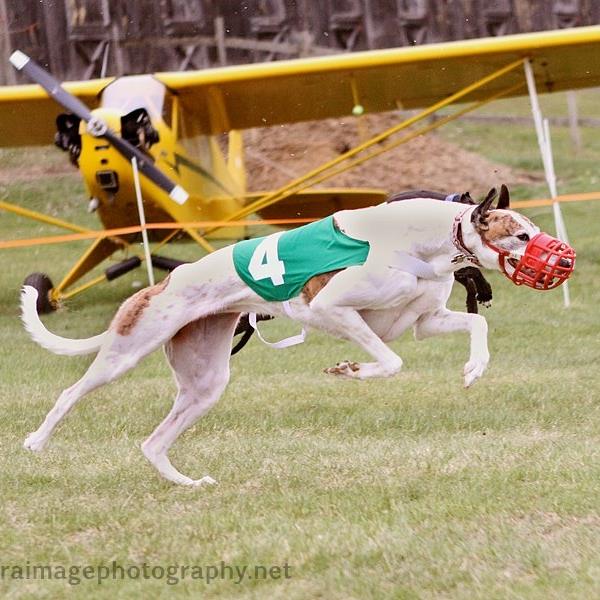
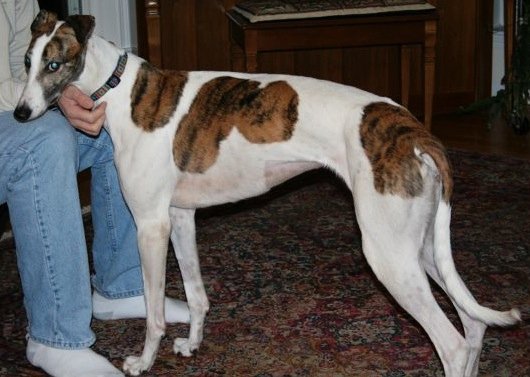
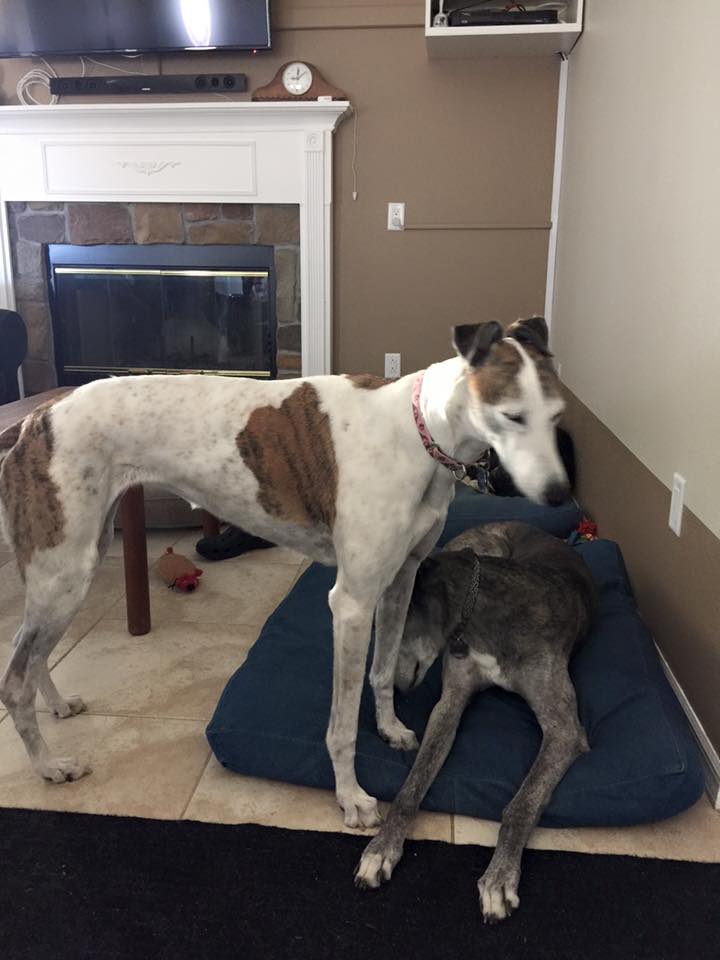
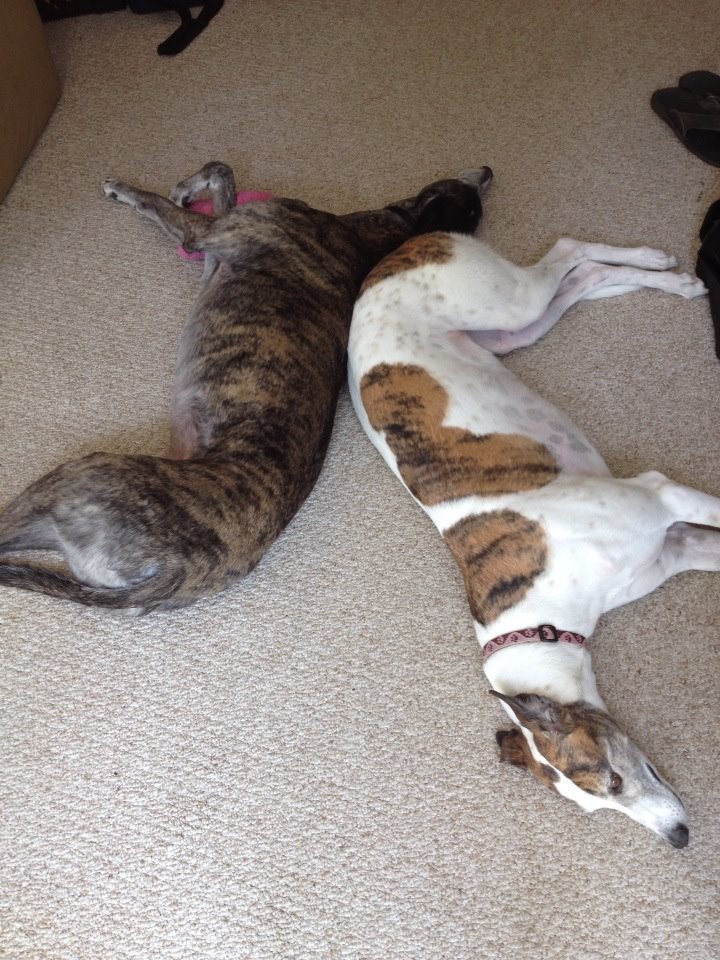
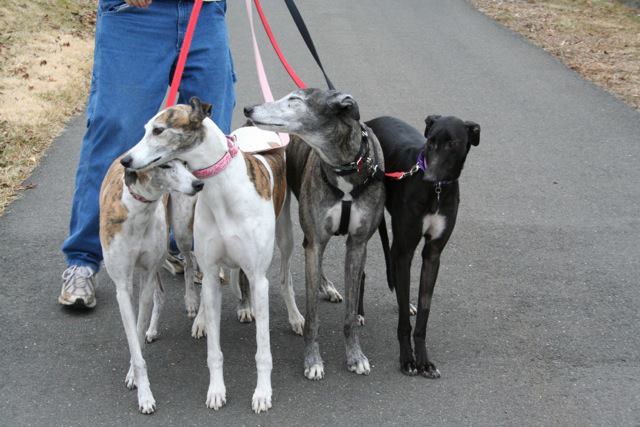
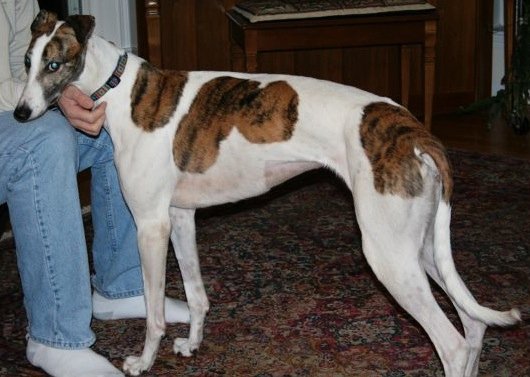
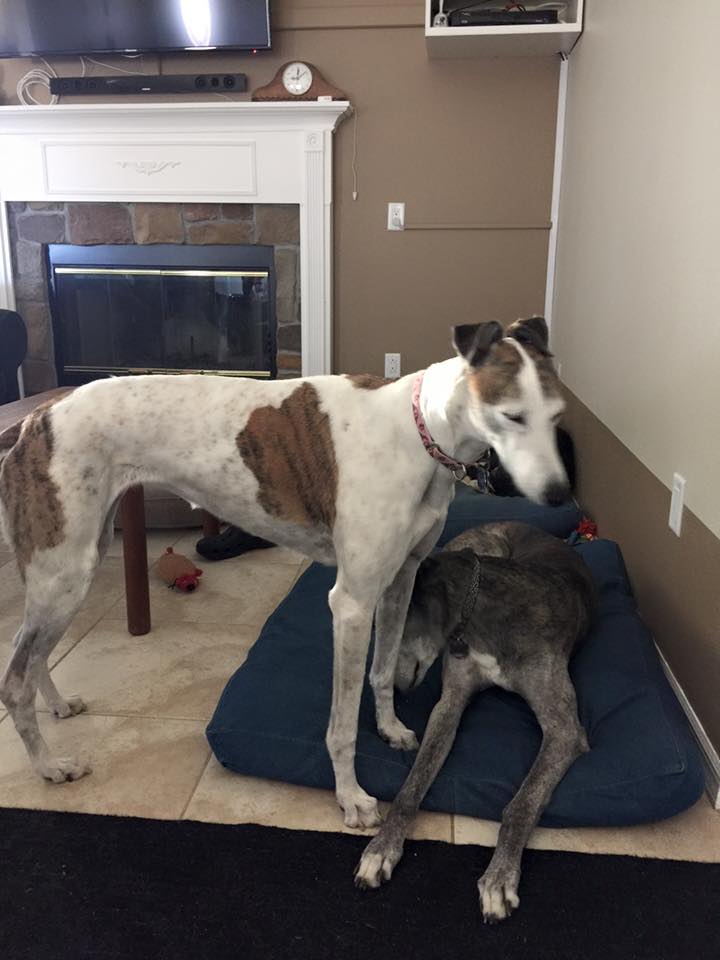
She was born on July 7, 2007. She left this world on August 30, 2020, six years ago. I miss her every day. She came to use after the Massachusetts tracks closed because of the Animal Rights lies and misinformation. Her trainer and owner Henry Chin decided to adopt her out rather than to move her to Florida with him. It was the right call, she could not have handled the temperatures or the tight turns of the Florida tracks. She came home to us in when she was 18 months old.
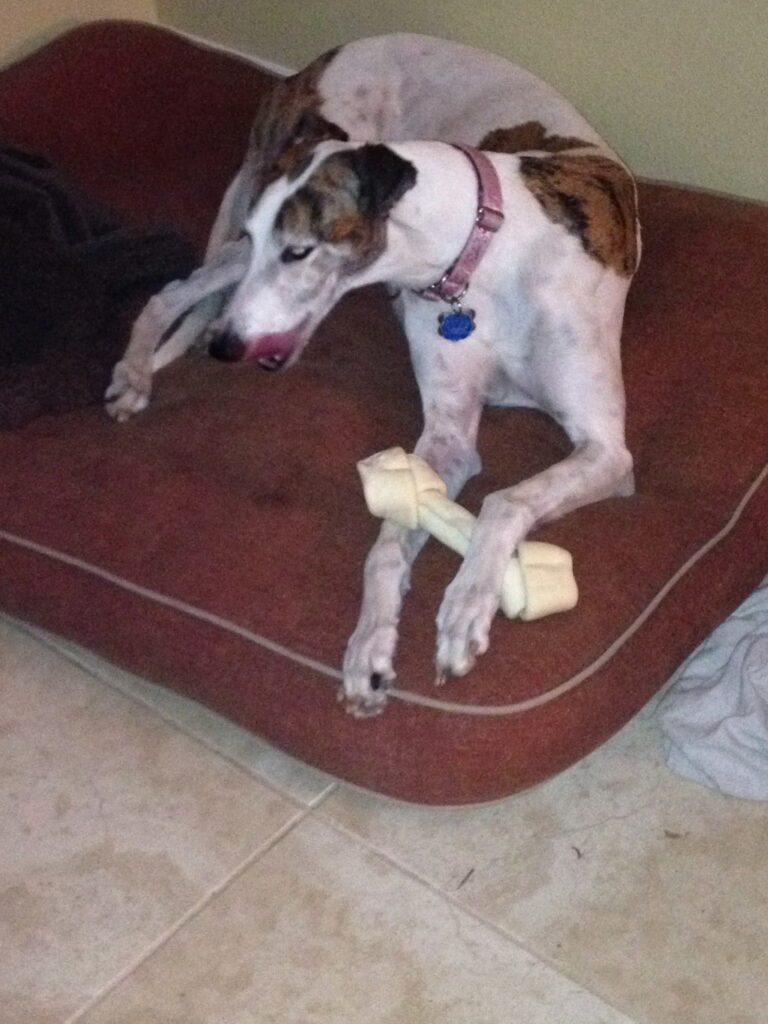
This was one of her first photos when she got home.
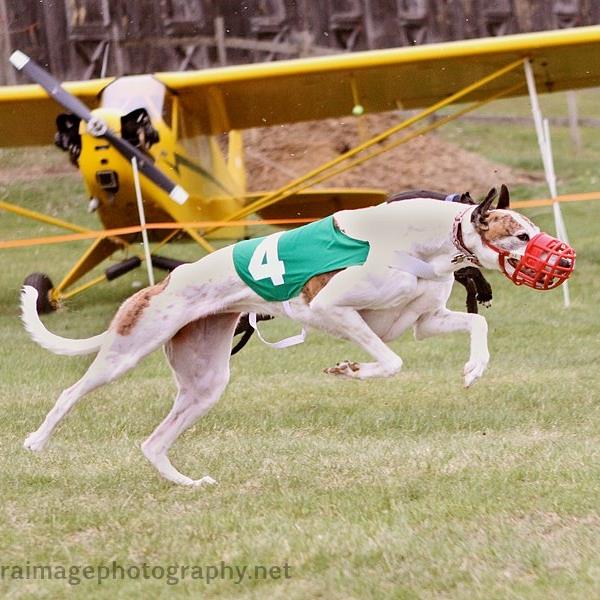
Her favorite thing in the world was racing, she loved her New Hampshire weekends with LRGA. She ran a few NOTRA meets as well, but she had a nagging toe injury that we just could not get past so she retired from the amateur tracks as well.
She was my dog, she put up with others, but there was no doubt in the wold she was my dog. She also had a knack for knowing when something was wrong with my health. She alerted when I had a mild stroke, she knew when I had a blood clot, and she always told us something was wrong.
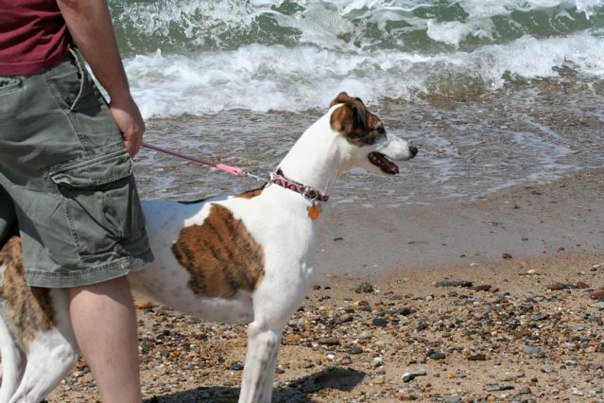
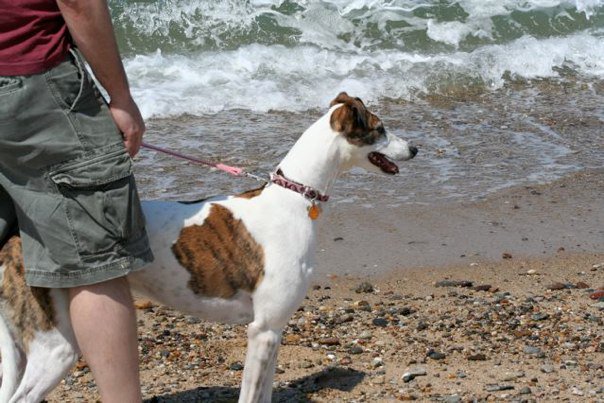
She started out coming home and being mentored by Bracken and had a few good trips with him before we lost him under anesthesia during a dental. He showed her Cape Cod, and explored Provincetown and visited the beaches with her.
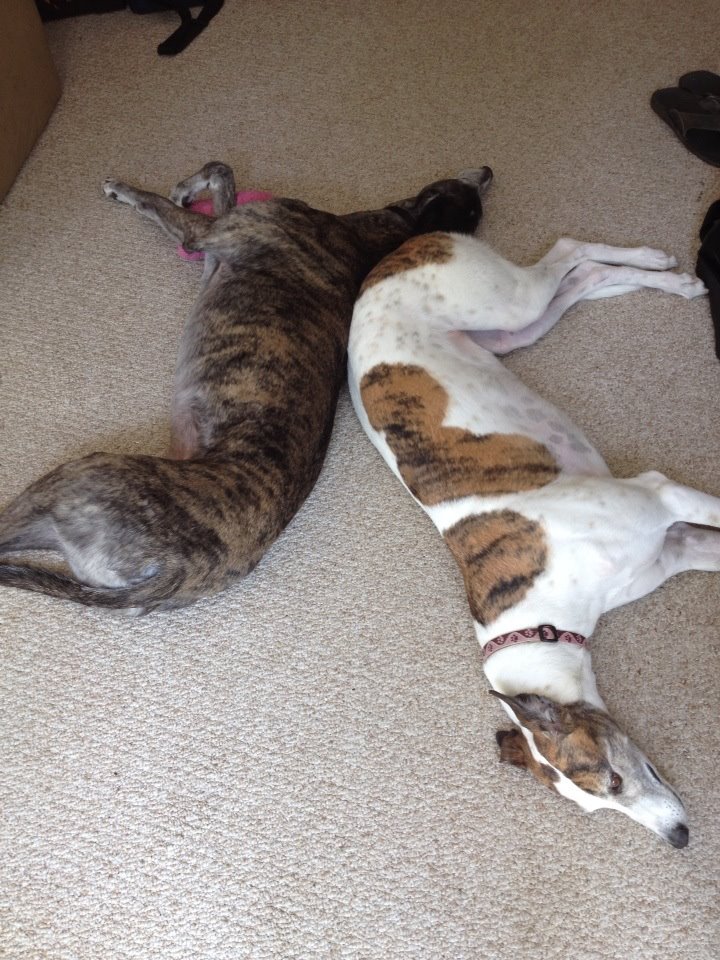
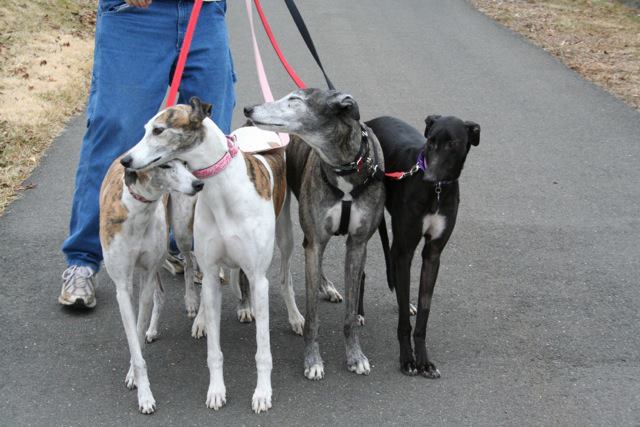
For a long time she was the wild child, but as years went on she slowed down. She was the reason I got involved in the racing side of greyhounds and eventually met Peanut and brought her home when she was done with racing.
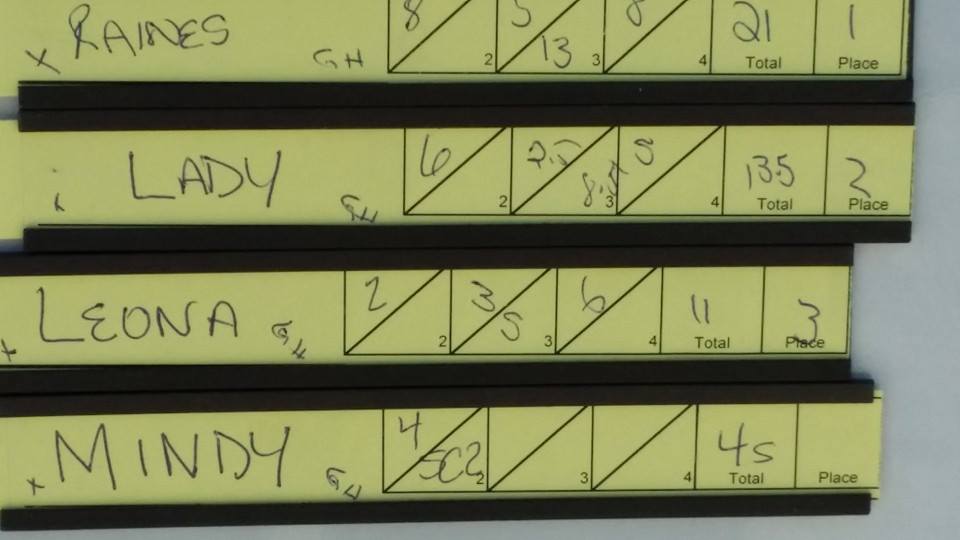
Ranger joined us soon after we lost Bracken. Mindy and Ranger became best buds.
Then Lady came home from the Florida tracks after she decided that the retirement was a much better option than racing.
We moved to Florida from Connecticut and the pack grew even more, at one point she was a member of the six pack. No, she was never the pack leader but she was 100% the fun police.
She did have a stroke and she scared the hell out of me. I was so afraid we were going to loose her. I would have never kept her with us if she didn’t have a glimmer of a hope of recovery. She did recover and I very rarely saw any stroke related symptoms.
She ran a few more times in Florida at the Jacksonville training track, but at that time it was hard to make a 3 hour drive and then I was having health issues as well. It just wasn’t possible anymore so she retired.
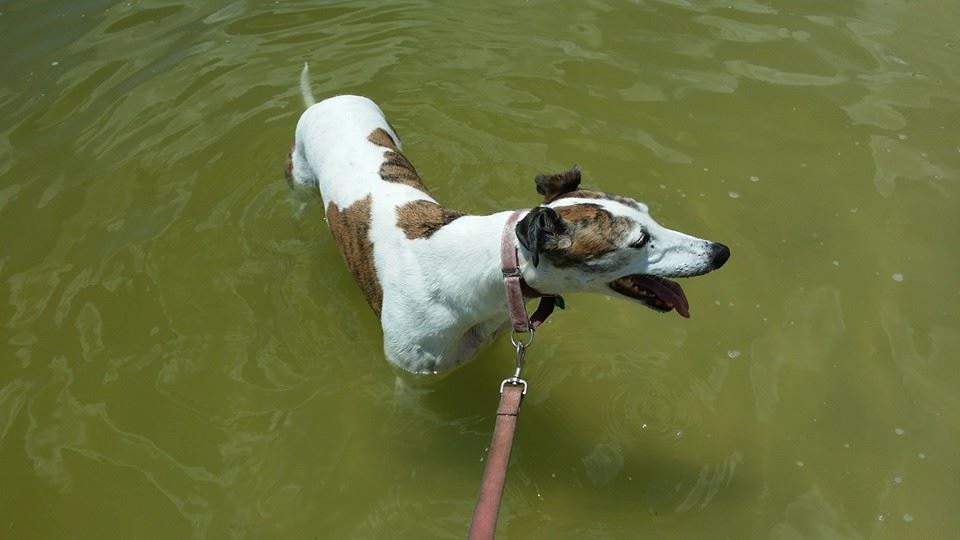
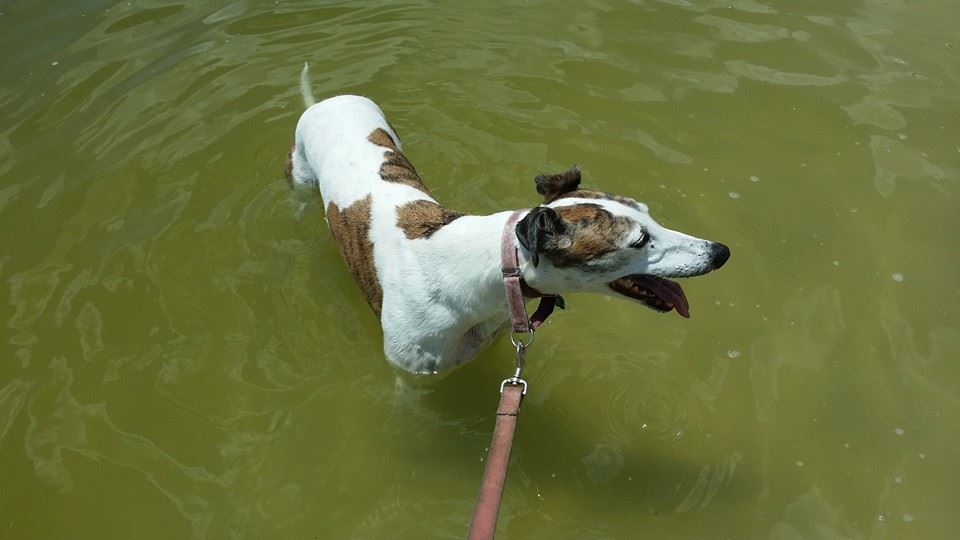
She was a water dog at heart. She loved to soak in the local lake. We had to be really careful as there were other things that lived in that lake but there was an area near the boat ramp that was pretty clear and I could see a good distance around her.
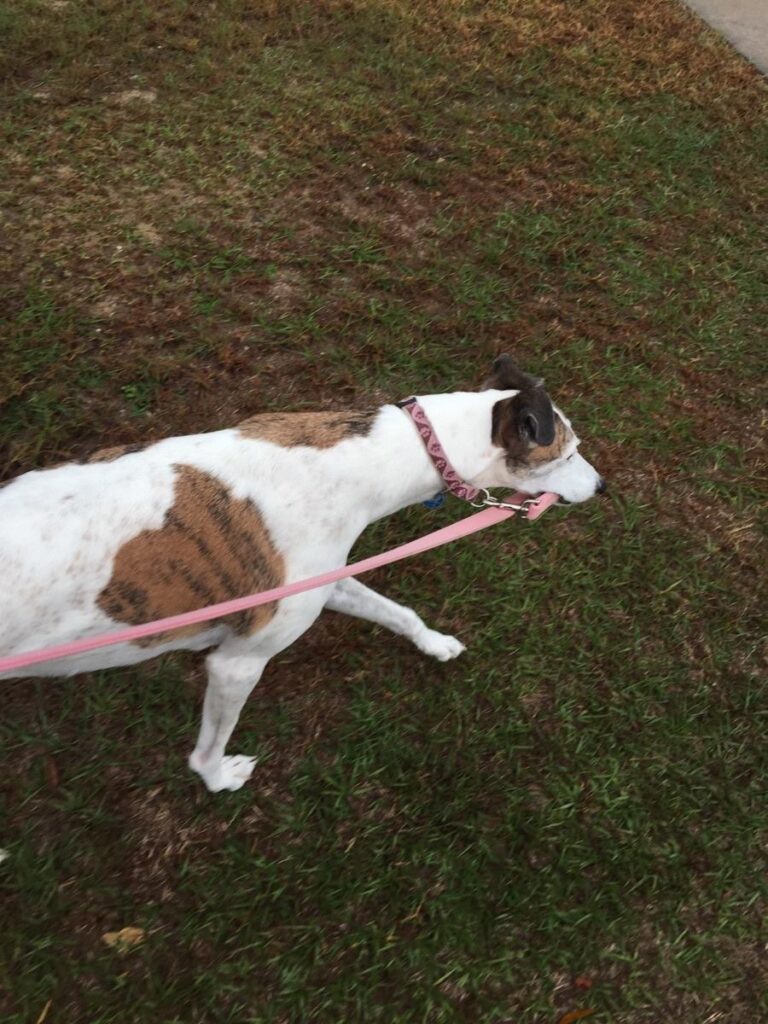
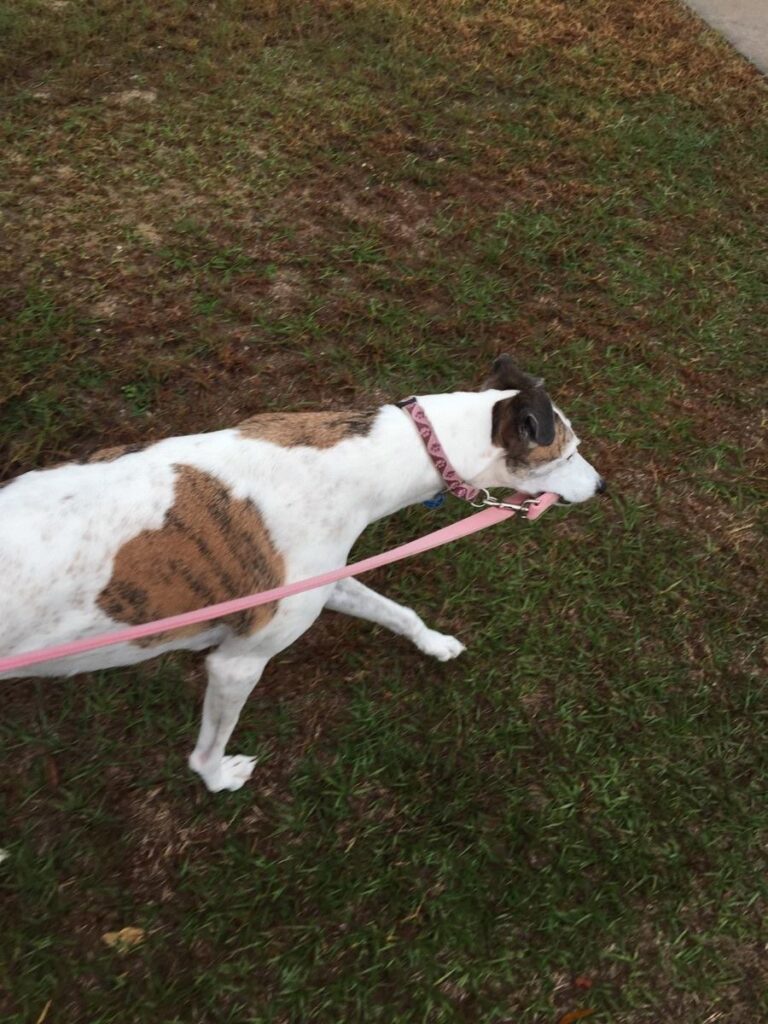
On her walks she used to walk herself on occasion. This habit went on until the day she left this world.
There is so much more I can say about her, but this will have to do for today.
August is complete. I finished the month with 68,700 meters of swimming, approximately 75,131 yards, reaching the 75,000-yard goal I had set for myself. September has a very different purpose.
The Huntsman World Senior Games are getting close, and my first priority event, the 200-meter breaststroke, is October 7. It will be followed by the 800-meter freestyle and 1500-meter freestyle. Instead of chasing another monthly distance goal, September training will be structured around preparing specifically for those races.
Meters still matter because training volume has to be planned and controlled. The difference is that the monthly total is now a result of the training plan rather than the objective of the training plan.
September Training Priorities
There are three primary Huntsman events driving the September program:
200 m Breaststroke – race pace, speed endurance, pacing and race execution.
800 m Freestyle – race-pace endurance and the ability to maintain speed across eight consecutive 100-meter segments.
1500 m Freestyle – aerobic endurance, efficient pacing and maintaining technique over the entire race.
The 100-meter breaststroke will probably still be part of my Huntsman experience, but the September training program will not be designed around it.
The September Training Rules
Several practical limitations determine how the month has to be structured.
One no-swim day every week.
The normal rest day will be Saturday or Sunday.
The rest day can move to Friday when work or scheduling requires it.
Weekday workouts have a maximum of 2,500 meters.
I normally have only about 45 minutes in the pool during my weekday lunch break.
Longer endurance workouts will normally be scheduled for the weekend.
The September meter total is not a goal that needs to be chased.
The final rule is particularly important for race-specific workouts.
When a 200 breaststroke, 800 freestyle or 1500 freestyle race-pace effort is scheduled, it will occur at the beginning of the workout after a very short warm-up.
This is intended to better reproduce race conditions. At Huntsman I will not swim a long training workout before stepping onto the starting block for one of my events. A race simulation performed after 1,500 or 2,000 meters of previous training would measure something different.
Race-specific work performed later in a workout can still be useful, but I will consider that endurance-under-fatigue training rather than a race simulation.
How September Is Divided
The month begins with a short recovery period following the large training load at the end of August. Training then builds toward increasingly specific Huntsman work before the taper begins during the final part of September.
Dates
Phase
Objective
Sep. 1–2
Reset
Recover from August
Sep. 3–9
Build I
Race endurance
Sep. 10–16
Build II
Strong quality work
Sep. 17–22
Peak
Race specificity
Sep. 23–30
Taper
Reduce volume
Oct. 1–6
Final Taper
Freshness + race feel
Oct. 7
Race
200 m Breaststroke
The provisional taper begins around September 23. Tapering will not mean stopping hard swimming. The intention is to progressively reduce total meters while retaining short amounts of race-speed work so that fitness is maintained while accumulated fatigue decreases.
Preliminary September Schedule
The following is the preliminary framework for the month. Individual workouts may change based on completed workout data, recovery, work obligations and how I am responding to training.
September 1–6 – Recovery and Reset
Date
Meters
Goal
Sep. 1
1,800
Recovery + technique
Sep. 2
2,500
Aerobic FR + BR
Sep. 3
2,500
200 BR endurance
Sep. 4
2,500
800/1500 FR endurance
Sep. 5
3,000
Long mixed aerobic
Sep. 6
OFF
Recovery
Planned swimming: 12,300 meters
September 7–13 – Main Build
Date
Meters
Goal
Sep. 7
2,500
1500 FR pace/endurance
Sep. 8
2,500
200 BR race endurance
Sep. 9
2,500
Recovery + technique
Sep. 10
2,500
800 FR threshold/pace
Sep. 11
2,500
Mixed endurance
Sep. 12
3,500
Long 1500 FR focus
Sep. 13
OFF
Recovery
Planned swimming: 16,000 meters
September 14–20 – Peak Training Week
Date
Meters
Goal
Sep. 14
2,500
200 BR race pace
Sep. 15
2,500
1500 FR race endurance
Sep. 16
2,500
Recovery + technique
Sep. 17
2,500
800 FR race pace
Sep. 18
2,500
BR + FR combination
Sep. 19
3,500
Long race-specific work
Sep. 20
OFF
Recovery
Planned swimming: 16,000 meters
This is currently planned as the strongest race-specific week of September. The objective isn’t simply maximum volume. The important work will be performed at increasingly precise Huntsman race intensities.
September 21–27 – Transition to Taper
Date
Meters
Goal
Sep. 21
2,500
1500 FR race pace
Sep. 22
2,500
200 BR rehearsal
Sep. 23
2,000
Taper begins
Sep. 24
2,000
800 FR race pace
Sep. 25
2,000
BR speed + turns
Sep. 26
2,500
Controlled endurance
Sep. 27
OFF
Recovery
Planned swimming: 13,500 meters
September 28–30 – Taper Continues
Date
Meters
Goal
Sep. 28
1,800
200 BR race pace
Sep. 29
1,800
800/1500 FR pace
Sep. 30
1,600
Technique + speed
The preliminary September plan totals approximately 59,200 meters. That number will almost certainly change as individual workouts are evaluated and adjusted. Unlike August, there is no requirement to reach a particular monthly total.
Week One – September 1–6
The first week is already planned in detail. Because August ended with a very large workload, there are no true race simulations during this opening block. The progression is recovery, aerobic work, breaststroke endurance, freestyle endurance, a longer mixed session and then a complete day away from the pool.
Tuesday, September 1 – Recovery and Technique
Total: 1,800 meters
Warmup:
200 Freestyle easy, 20s rest
100 Breaststroke easy, 30s rest

Main Set:
4x100 Freestyle easy, 15s rest. 30s rest after set
4x50 Breaststroke smooth, 20s rest. 30s rest after set
4x100 Freestyle aerobic, 15s rest. 30s rest after set
4x50 Breaststroke smooth, 20s rest. 30s rest after set

Warm Down:
300 Freestyle easy
The purpose is recovery rather than performance. Freestyle should remain comfortable and breaststroke should emphasize smooth timing and technique.
Wednesday, September 2 – Aerobic Freestyle and Controlled Breaststroke
Total: 2,500 meters
Warmup:
200 Freestyle easy, 20s rest
100 Breaststroke easy, 30s rest

Main Set:
4x200 Freestyle aerobic, 20s rest. 30s rest after set
4x50 Breaststroke smooth, 20s rest. 30s rest after set
4x100 Freestyle aerobic strong, 15s rest. 30s rest after set
4x100 Breaststroke controlled, 20s rest. 30s rest after set
2x100 Freestyle easy, 15s rest

Warm Down:
200 Freestyle easy
This returns to the normal weekday maximum while keeping the intensity controlled. The objective is aerobic conditioning and clean swimming rather than threshold work.
Thursday, September 3 – 200 Breaststroke Endurance
Total: 2,500 meters
Warmup:
200 Freestyle easy, 20s rest
100 Breaststroke easy, 30s rest

Main Set:
4x50 Breaststroke build, 20s rest. 30s rest after set
4x100 Breaststroke strong controlled, 25s rest. 30s rest after set
200 Freestyle easy, 20s rest
4x150 Breaststroke endurance, 25s rest. 30s rest after set
200 Freestyle easy, 20s rest
4x100 Breaststroke strong, 25s rest. 30s rest after set

Warm Down:
200 Freestyle easy
This is breaststroke endurance training rather than a 200-meter race simulation. The goal is to sustain efficient breaststroke while accumulating meaningful race-specific volume.
Friday, September 4 – 800/1500 Freestyle Endurance
Total: 2,500 meters
Warmup:
200 Freestyle easy, 20s rest
100 Breaststroke easy, 30s rest

Main Set:
3x400 Freestyle endurance, 30s rest. 30s rest after set
4x100 Freestyle strong aerobic, 20s rest. 30s rest after set
4x50 Breaststroke smooth, 20s rest. 30s rest after set
2x100 Freestyle strong, 20s rest

Warm Down:
200 Freestyle easy
The 400-meter repetitions provide the primary endurance work. The goal is to progressively move toward threshold pace without turning the workout into another CSS test.
Saturday, September 5 – Long Mixed Aerobic
Total: 3,000 meters
Warmup:
200 Freestyle easy
100 Breaststroke easy, 30s rest

Main Set:
4x200 Freestyle aerobic, 20s rest. 30s rest after set
4x100 Breaststroke smooth endurance, 20s rest. 30s rest after set
5x200 Freestyle strong aerobic, 20s rest. 30s rest after set
4x50 Breaststroke smooth, 20s rest

Warm Down:
300 Freestyle easy
This is the week’s longest session, but there is no reason to repeat the 6,000-meter swims from August. The goal is controlled endurance with the ability to finish the primary freestyle work strongly.
Sunday, September 6 – No Swim
Planned recovery day.
This is a complete day away from swimming rather than an optional recovery workout. Normal daily activity is fine, but the purpose is to absorb the first five days of September training before beginning the next build week.
Week One at a Glance
Date
Meters
Focus
Sep. 1
1,800
Recovery
Sep. 2
2,500
Aerobic
Sep. 3
2,500
200 BR
Sep. 4
2,500
800/1500 FR
Sep. 5
3,000
Long aerobic
Sep. 6
OFF
Recovery
Total
12,300
Planning One Week at a Time
The overall September framework is established, but I am not going to lock every individual workout into place a month in advance.
I want each training week planned ahead so I know exactly what I am doing when I arrive at the pool. At the end of each week, however, I will evaluate the completed FORM and TrainingPeaks data before finalizing the following week’s workouts.
That gives the program structure without preventing it from responding to actual performance. Pace, heart rate, stroke consistency, fatigue and recovery can all influence what happens next.
The Shift from August to September
August was largely about rebuilding endurance, establishing benchmarks and discovering what I could currently do. By the end of the month I had a 1:39.5/100-meter CSS benchmark, meaningful training performances at my Huntsman race distances and more than 68 kilometers of swimming completed during the month.
September is about converting that fitness into racing ability.
The 1500 freestyle needs sustainable aerobic speed. The 800 freestyle needs increasingly precise race-pace endurance. The 200 breaststroke needs speed endurance, pacing and race execution. All three need enough recovery that I arrive in October with the fitness from August and September available rather than buried underneath accumulated fatigue.
The distance goal is behind me. September is where training starts becoming racing.