Refrigerant Cylinders, Identification, Storage, and Shipping
Refrigerant cylinders are pressure vessels. Correctly identifying, filling, storing, transporting, and handling them is an essential part of safe HVAC/R service. A technician must know what is in a cylinder, whether the cylinder is intended for new refrigerant or recovered refrigerant, and whether the cylinder is suitable for continued use.
Cylinder color can provide useful visual information in some situations, but color alone should never be used to identify a refrigerant. Labels, markings, cylinder specifications, and service records provide the information needed to positively identify the contents and safely handle the cylinder.
Learning Objectives
Identify Cylinder Types
Distinguish between cylinders used to supply refrigerant and cylinders designed to receive recovered refrigerant.
Identify Refrigerants Correctly
Use labels and cylinder markings rather than relying on cylinder color alone to determine refrigerant contents.
Understand Filling Limits
Explain why recovery cylinders require adequate vapor space and why overfilling a cylinder creates a serious pressure hazard.
Handle Cylinders Safely
Recognize temperature, pressure, storage, transportation, and physical-damage hazards associated with refrigerant cylinders.
Not All Refrigerant Cylinders Serve the Same Purpose
Technicians encounter several types of refrigerant cylinders. Some contain refrigerant supplied for installation or service, while others are specifically designed to receive refrigerant removed from equipment during recovery.
It is important to distinguish between a cylinder containing refrigerant intended for use and a recovery cylinder intended to receive refrigerant from a system. The cylinders may differ in construction, valves, markings, service requirements, and permitted use.
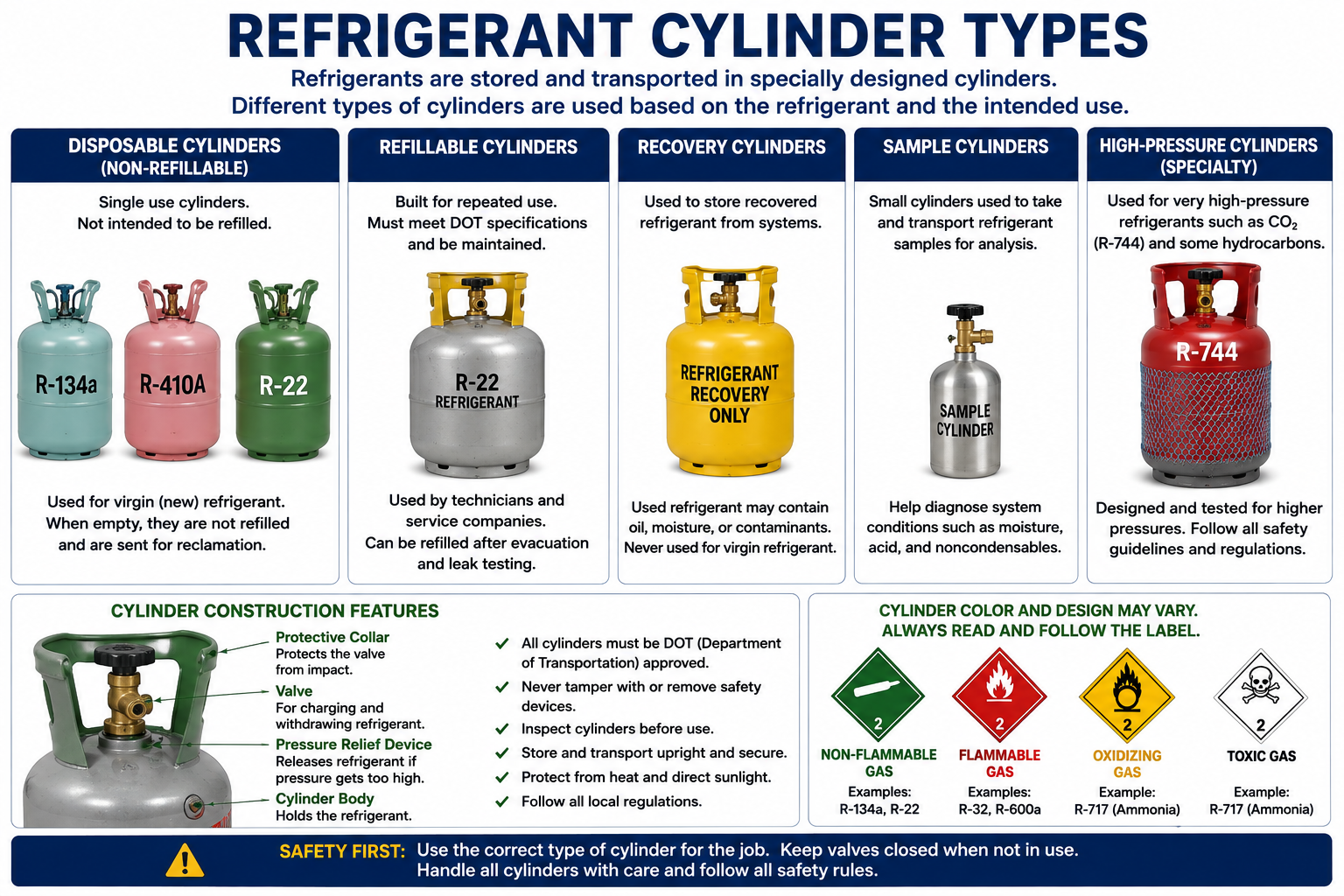
Never Assume a Cylinder Can Be Used for Recovery
Recovered refrigerant must be placed in an appropriate refillable recovery cylinder designed and approved for that purpose. Do not improvise by using a disposable or otherwise unsuitable container.
Read the Cylinder — Do Not Guess
Before connecting a refrigerant cylinder to a system, the technician must know what refrigerant the cylinder contains. Introducing the wrong refrigerant can contaminate the system, contaminate recovery equipment and cylinders, create unexpected operating pressures, damage equipment, and create safety hazards.
Refrigerant cylinders contain labels and markings that provide important information. Depending on the cylinder and application, this information can include the refrigerant designation, net or gross weight information, cylinder specifications, manufacturer information, hazard information, and transportation markings.
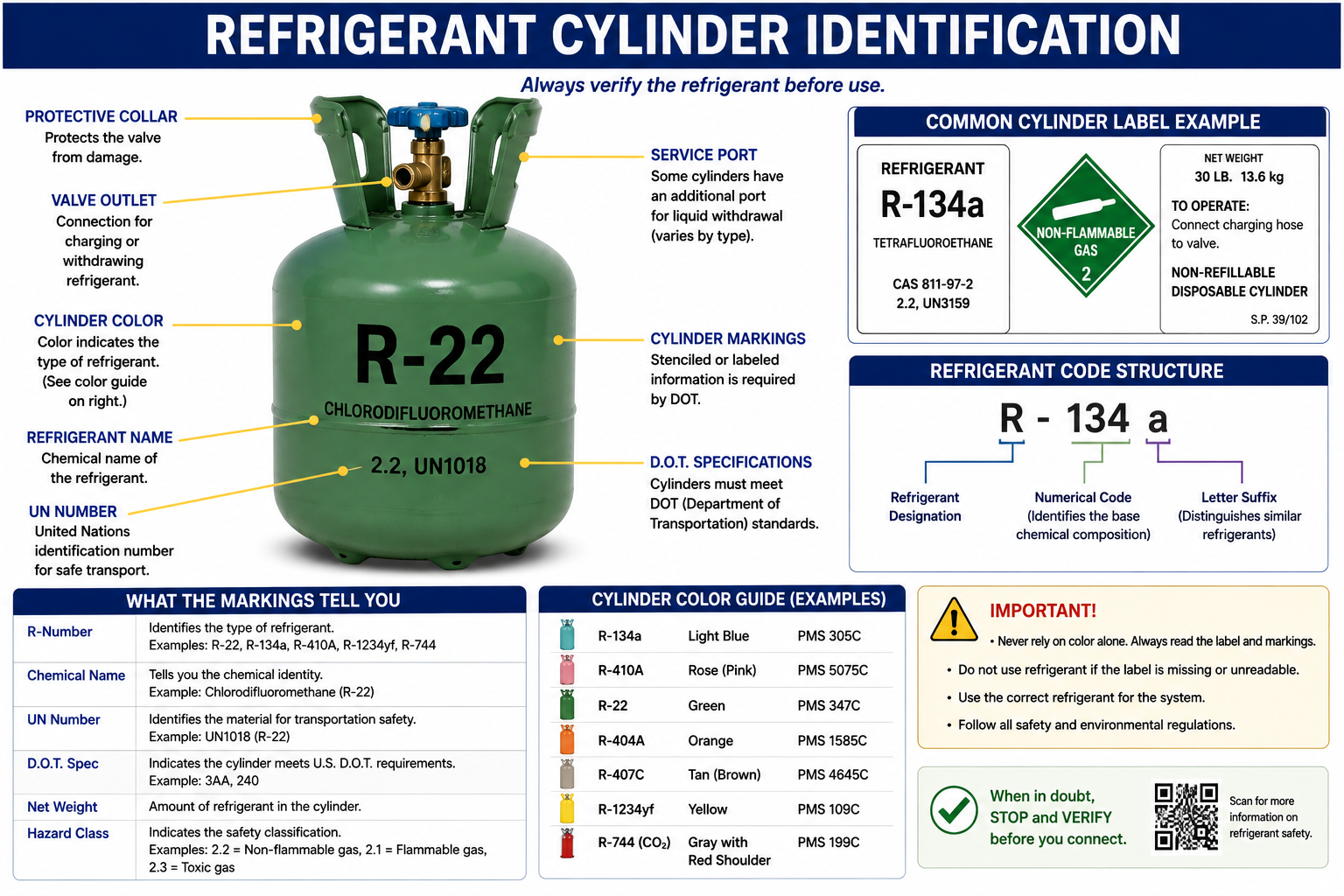
Historical Refrigerant Cylinder Colors
For many years, refrigerant cylinders were commonly associated with refrigerant-specific colors. Technicians learned to recognize familiar examples and often used cylinder color as a quick visual clue when working in the field.
That practice creates a problem: color is not positive refrigerant identification. Industry cylinder-color conventions have changed, and technicians may encounter older cylinders, newer cylinders, recovery cylinders, repainted cylinders, or containers whose appearance does not correspond with an older color chart.

Why Learn the Historical Colors?
Older HVAC/R equipment, training material, examination questions, service literature, and cylinders may still reference historical refrigerant colors. Technicians should recognize that history while understanding that the label is the primary means of identifying the refrigerant.
Cylinders Used to Receive Recovered Refrigerant
When refrigerant is removed from a system, it must be transferred into a suitable recovery cylinder. Unlike a disposable supply cylinder, a recovery cylinder is designed to be refilled and reused within its approved service requirements.
Recovery cylinders commonly provide separate connections or valve functions for liquid and vapor. This allows the technician to select the appropriate connection for the recovery or transfer procedure being performed.
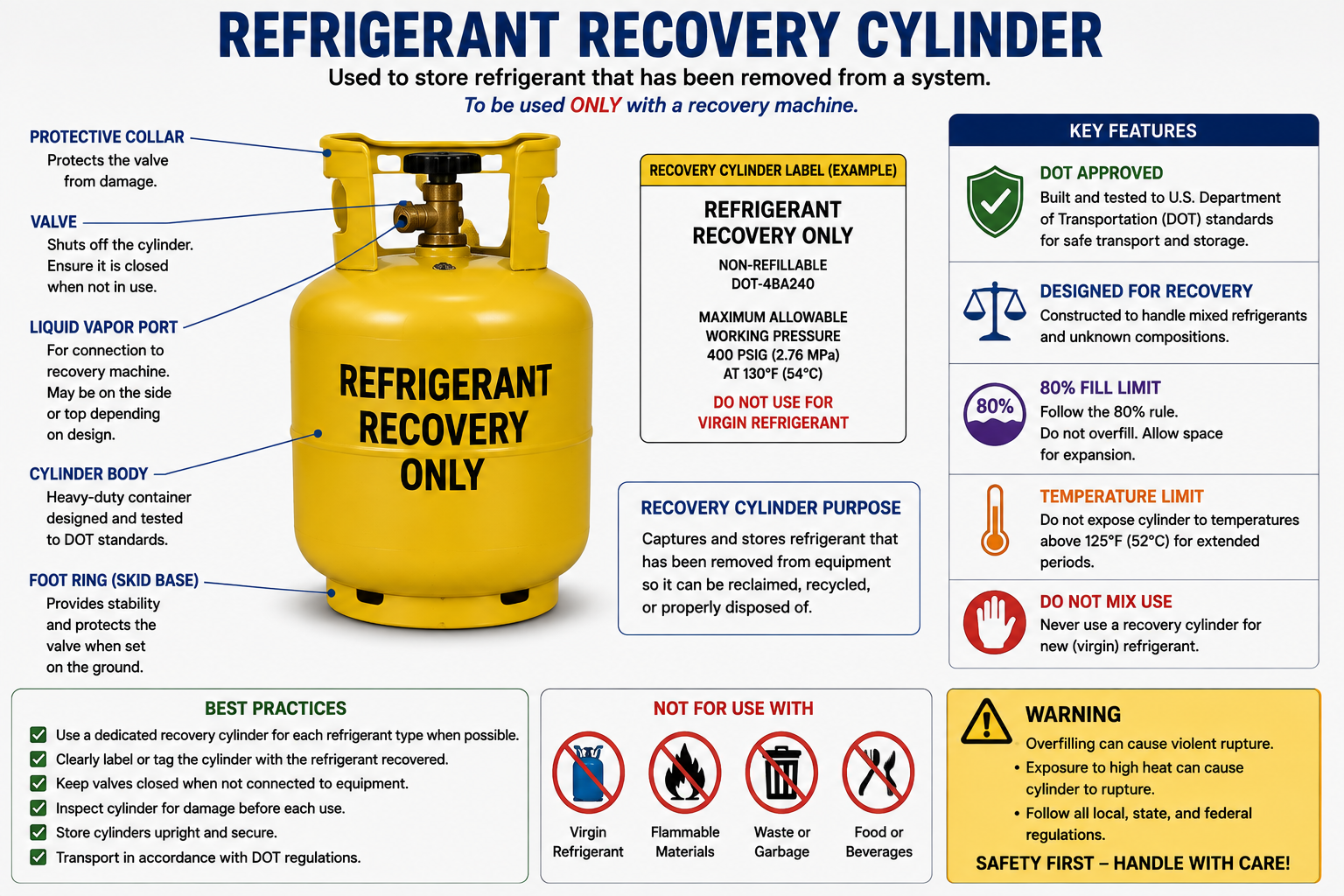
Check the Cylinder
Inspect the cylinder and valve assembly for obvious damage, corrosion, or other conditions that could make it unsafe to use.
Identify the Contents
Label recovered refrigerant so the contents remain identifiable and do not become accidentally mixed with another refrigerant.
Know the Cylinder Weight
The cylinder tare weight is necessary when determining how much refrigerant has been placed in the cylinder.
Stay Within Limits
Never exceed the permitted filling limit or other cylinder specifications.
Refrigerant Needs Expansion Space
Liquid refrigerant expands as its temperature increases. A recovery cylinder filled completely with liquid would have little or no vapor space available for that expansion. As the cylinder warms, the expanding liquid can create extremely high pressure.
For this reason, recovery cylinders must not be completely filled with liquid. In technician training, this is commonly expressed as the 80 percent fill rule: leave sufficient space in the cylinder for liquid expansion.
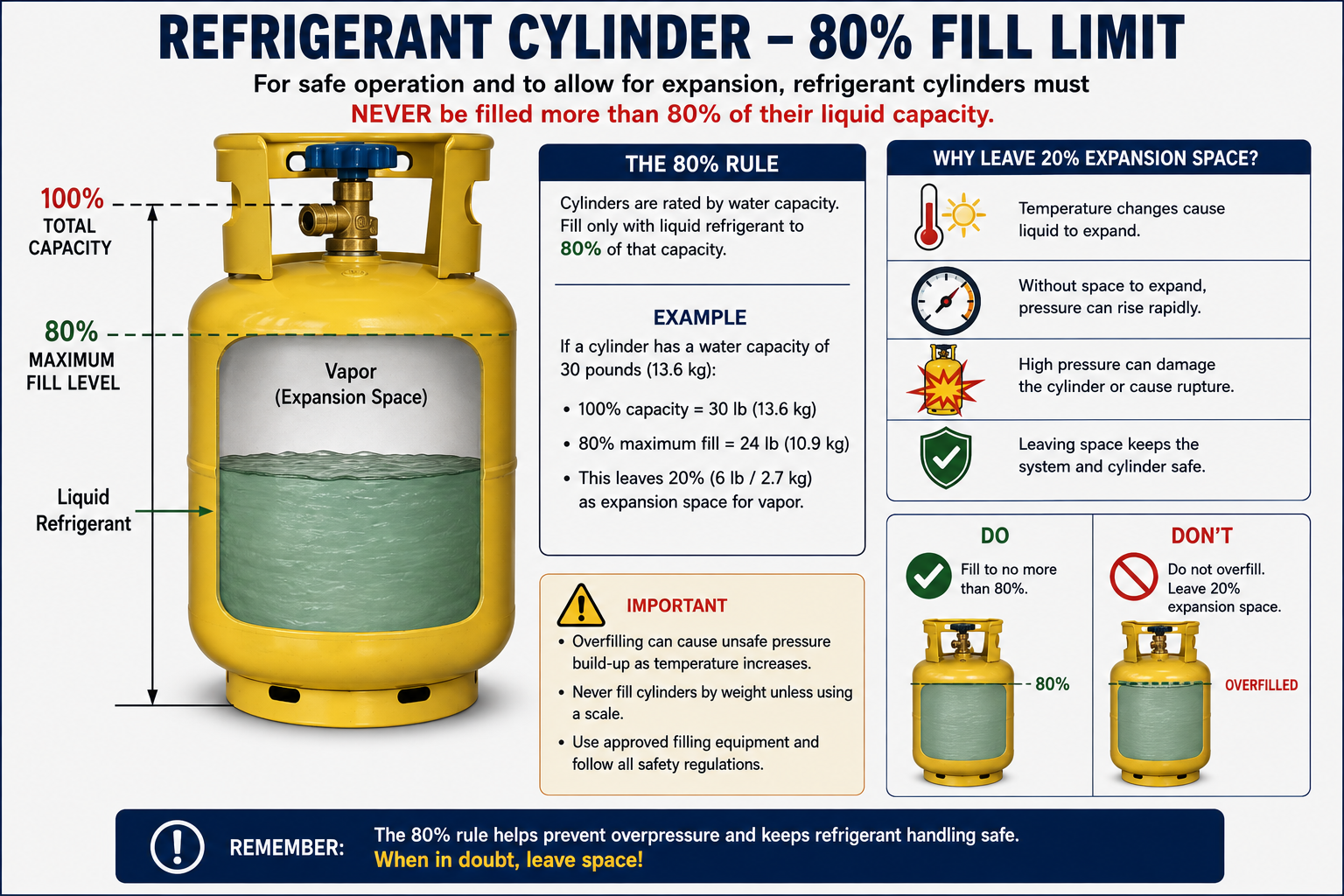
Do Not Estimate Cylinder Fill by Appearance
Use an appropriate refrigerant scale and the cylinder’s weight information to monitor the amount of refrigerant being recovered. Do not wait for a cylinder to appear or feel full.
Never Expose Refrigerant Cylinders to Excessive Heat
Refrigerant pressure changes with temperature. When the temperature of refrigerant in a closed cylinder increases, the pressure inside the cylinder also increases.
This is why a cylinder that is safe at one temperature can become dangerous if it is exposed to excessive heat. Direct sunlight, enclosed vehicles, heaters, open flames, hot mechanical rooms, and other heat sources can significantly increase cylinder temperature and pressure.
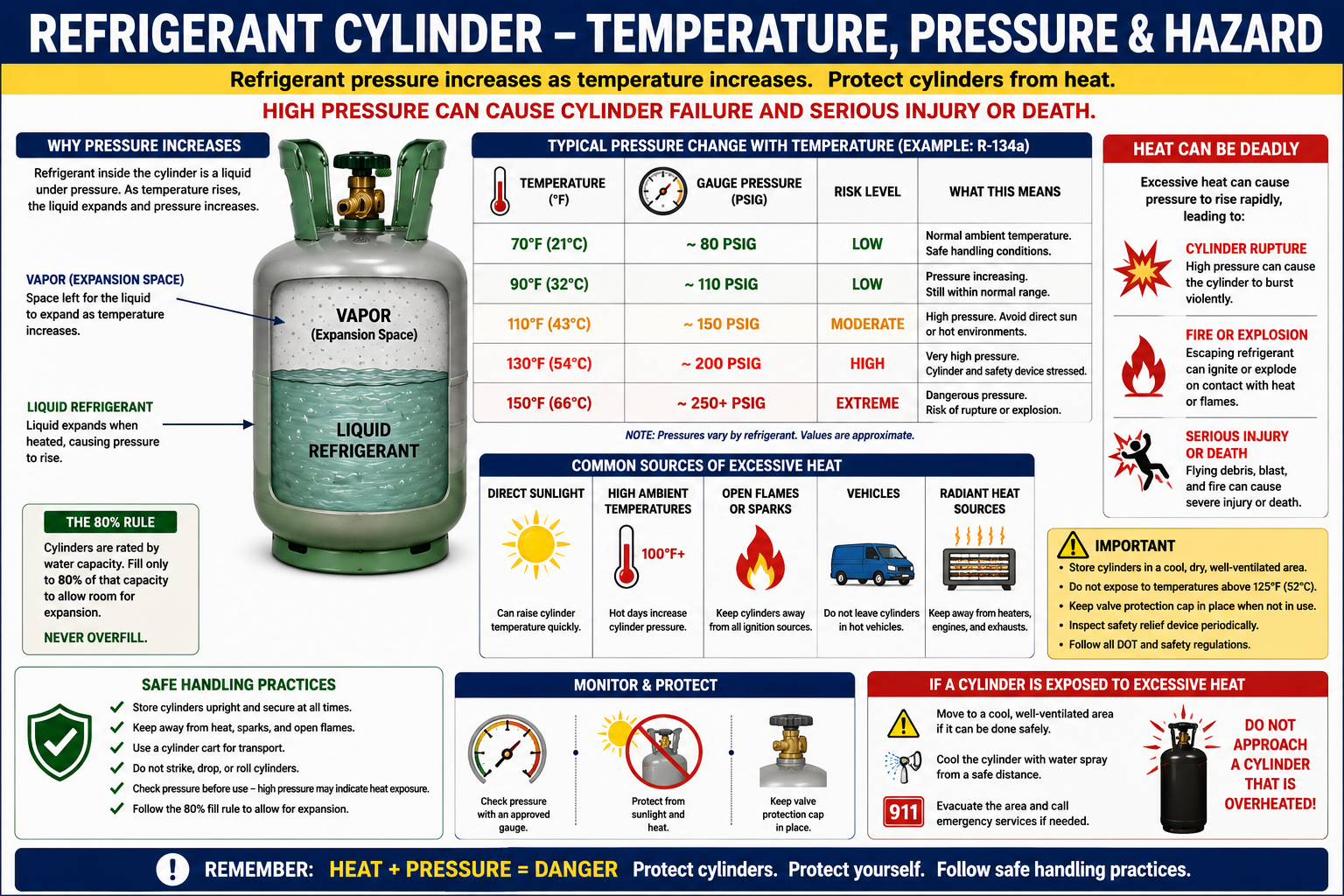
Never Use an Open Flame to Heat a Refrigerant Cylinder
Applying a torch or other open flame to a refrigerant cylinder creates an extreme pressure and fire hazard. If a service procedure requires controlled warming, use only an approved method and remain within the cylinder and refrigerant manufacturer’s limitations.
Protect Cylinders While They Are Stored
A refrigerant cylinder should be treated as a pressurized container even when it is not currently connected to service equipment. Proper storage protects the cylinder from heat, physical damage, corrosion, accidental valve operation, and unauthorized handling.
Keep Cylinders Secure
Store cylinders so they cannot easily fall, roll, or be struck by equipment or vehicles.
Protect the Valve
Use required valve protection and do not lift or handle a cylinder in a way that could damage its valve assembly.
Control Temperature
Keep cylinders away from excessive heat and other conditions outside their approved storage limits.
Keep Labels Readable
Maintain clear refrigerant and cylinder identification so another technician does not have to guess what the cylinder contains.
Inspect for Damage
Do not ignore severe corrosion, dents, valve damage, fire exposure, or other conditions that may affect cylinder integrity.
Separate Incompatible Materials
Follow applicable storage requirements for compressed gases, refrigerants, flammable materials, and other hazardous substances.
Moving Refrigerant Cylinders Safely
Refrigerant cylinders may be transported between suppliers, shops, job sites, recovery facilities, and reclamation facilities. During transportation, the cylinder remains a pressurized container and must be protected accordingly.
Transportation and shipping requirements can depend on the refrigerant, cylinder, quantity, vehicle, and method of transportation. Hazard communication, cylinder specifications, securing methods, shipping papers, labels, markings, and other requirements may apply.
Secure the Cylinder
Prevent cylinders from rolling, sliding, falling, or striking other objects during transportation.
Protect the Valve
Valve damage can result in a rapid refrigerant release and can turn a pressurized cylinder into a serious physical hazard.
Prevent Excessive Heating
Do not leave cylinders where vehicle or environmental temperatures can expose them to unsafe heat.
Maintain Identification
Keep required labels and markings legible and ensure recovered refrigerant remains properly identified.
Shipping Requirements Extend Beyond Section 608
EPA Section 608 is not the only regulation affecting refrigerant handling. Transportation of refrigerants and compressed-gas cylinders may also be subject to U.S. Department of Transportation requirements and other applicable federal, state, and local rules.
Refillable Cylinders Require Continued Inspection
A recovery cylinder is not automatically safe forever simply because it was originally manufactured as a refillable cylinder. Pressure vessels remain subject to condition requirements and applicable inspection or requalification requirements.
Before using a recovery cylinder, check its markings and physical condition. A cylinder that is damaged, severely corroded, outside applicable requalification requirements, or otherwise questionable should not simply be placed back into service.
One Cylinder Should Not Become a Mystery Mixture
Mixing different refrigerants in the same recovery cylinder creates a significant service and reclamation problem. Once mixed, refrigerants may be difficult or uneconomical to separate and may no longer be suitable for ordinary recycling or reclamation.
Before beginning recovery, identify the refrigerant in the appliance and confirm the contents of the recovery cylinder. When there is reason to believe a system contains an unknown or contaminated refrigerant, treat it accordingly rather than mixing it with known refrigerant.
Do Not Rely on the Equipment Nameplate Alone
The nameplate tells you what refrigerant the equipment was designed to use. It does not prove that the refrigerant currently inside the system is correct. Previous service, retrofits, contamination, or improper charging may have changed the actual contents.
Good Habits Prevent Accidents
Wear Appropriate PPE
Protect eyes and skin when connecting, disconnecting, transferring, or recovering refrigerant. Escaping liquid refrigerant can cause severe cold burns or frostbite.
Use the Correct Cylinder
Verify that the cylinder is appropriate for the refrigerant and the service operation being performed.
Use a Scale
Monitor cylinder weight during recovery or transfer rather than guessing how much refrigerant is inside.
Keep Cylinders Upright and Secure
Follow the cylinder manufacturer’s handling requirements and prevent cylinders from falling or being damaged.
Protect Cylinders from Heat
Remember that increasing refrigerant temperature increases cylinder pressure.
Close and Protect Valves
When service is complete, properly close valves, disconnect equipment safely, and install required valve protection.
What You Need to Remember
- Refrigerant cylinders are pressurized containers and must be handled accordingly.
- A recovery cylinder is designed to receive refrigerant removed from equipment.
- Do not use an inappropriate or disposable cylinder for refrigerant recovery.
- Read the label to identify refrigerant. Do not rely on cylinder color alone.
- Historical refrigerant cylinder colors may still appear in older equipment, literature, and training material.
- Recovery cylinders require sufficient vapor space for liquid refrigerant expansion.
- The commonly taught maximum recovery-cylinder liquid fill is 80 percent.
- Use a refrigerant scale to monitor cylinder fill.
- Refrigerant pressure increases as temperature increases.
- Protect refrigerant cylinders from excessive heat.
- Never heat a refrigerant cylinder with an open flame.
- Do not mix different refrigerants in the same recovery cylinder.
- Keep cylinders properly identified, secured, and protected from physical damage.
- Refillable cylinders must remain within applicable inspection and requalification requirements.
- Transportation and shipping requirements may involve regulations in addition to EPA Section 608.
Review Questions
1. Should refrigerant be identified by cylinder color?
Answer: No. Cylinder color may provide historical or supplemental information, but the cylinder label and markings should be used for positive refrigerant identification.
2. Why should a recovery cylinder not be completely filled with liquid refrigerant?
Answer: Liquid refrigerant expands as temperature increases. Adequate vapor space must remain in the cylinder to allow for expansion and prevent dangerous pressure increases.
3. What instrument should be used to monitor the amount of refrigerant placed in a recovery cylinder?
Answer: An appropriate refrigerant scale.
4. What happens to refrigerant cylinder pressure as temperature increases?
Answer: The pressure increases.
5. Why should different refrigerants not be mixed in the same recovery cylinder?
Answer: Mixing contaminates the recovered refrigerant and may make recycling or reclamation difficult or uneconomical.
6. Can a cylinder designed to supply refrigerant automatically be used as a recovery cylinder?
Answer: No. Refrigerant recovery requires an appropriate refillable recovery cylinder approved for that purpose.
7. Why must refrigerant cylinders be protected from excessive heat?
Answer: Increasing temperature increases the pressure of the refrigerant inside the cylinder and can create a dangerous overpressure condition.
Lesson 22 Summary
- Refrigerant cylinders are pressure vessels designed for specific purposes.
- Recovery cylinders are refillable cylinders designed to receive refrigerant removed from equipment.
- Cylinder labels and markings should be used to positively identify refrigerant.
- Historical cylinder colors are useful background knowledge but should not be relied upon for identification.
- Recovery cylinders require vapor space to accommodate liquid expansion.
- The commonly taught recovery-cylinder filling limit is 80 percent.
- A refrigerant scale should be used to monitor cylinder weight during recovery and transfer.
- Refrigerant cylinder pressure increases with temperature.
- Cylinders must be protected from excessive heat, physical damage, and valve damage.
- Different refrigerants should not be mixed in the same recovery cylinder.
- Recovery cylinders must remain properly identified and within applicable service and requalification requirements.
- Safe storage and transportation require cylinders to be secured and protected.
- Refrigerant transportation may involve DOT and other requirements in addition to EPA Section 608.