EPA Section 608 Fundamentals and Technician Certification
EPA Section 608 is more than an examination a technician must pass. It establishes requirements intended to reduce refrigerant emissions during the installation, maintenance, service, repair, and disposal of refrigeration and air-conditioning equipment. Understanding Section 608 means understanding both what the regulations require and why proper refrigerant handling is an important part of professional HVAC/R service.
This lesson introduces the regulatory framework behind Section 608, explains technician certification, identifies the different certification types, reviews appliance classifications, and examines refrigerant sales restrictions and the prohibition against intentional venting. Later lessons in Part VII will concentrate on the Core, Type I, Type II, and Type III knowledge required for certification.
Learning Objectives
Understand Section 608
Explain why Section 608 regulates refrigerant handling and how those requirements affect HVAC/R service work.
Identify Certification Types
Distinguish among Type I, Type II, Type III, and Universal Section 608 technician certifications.
Recognize Appliance Categories
Understand how appliance type and operating-pressure classification affect certification and service requirements.
Understand Major Regulatory Rules
Explain basic refrigerant sales restrictions and the prohibition against intentionally venting regulated refrigerants.
Why EPA Regulates Refrigerant Service
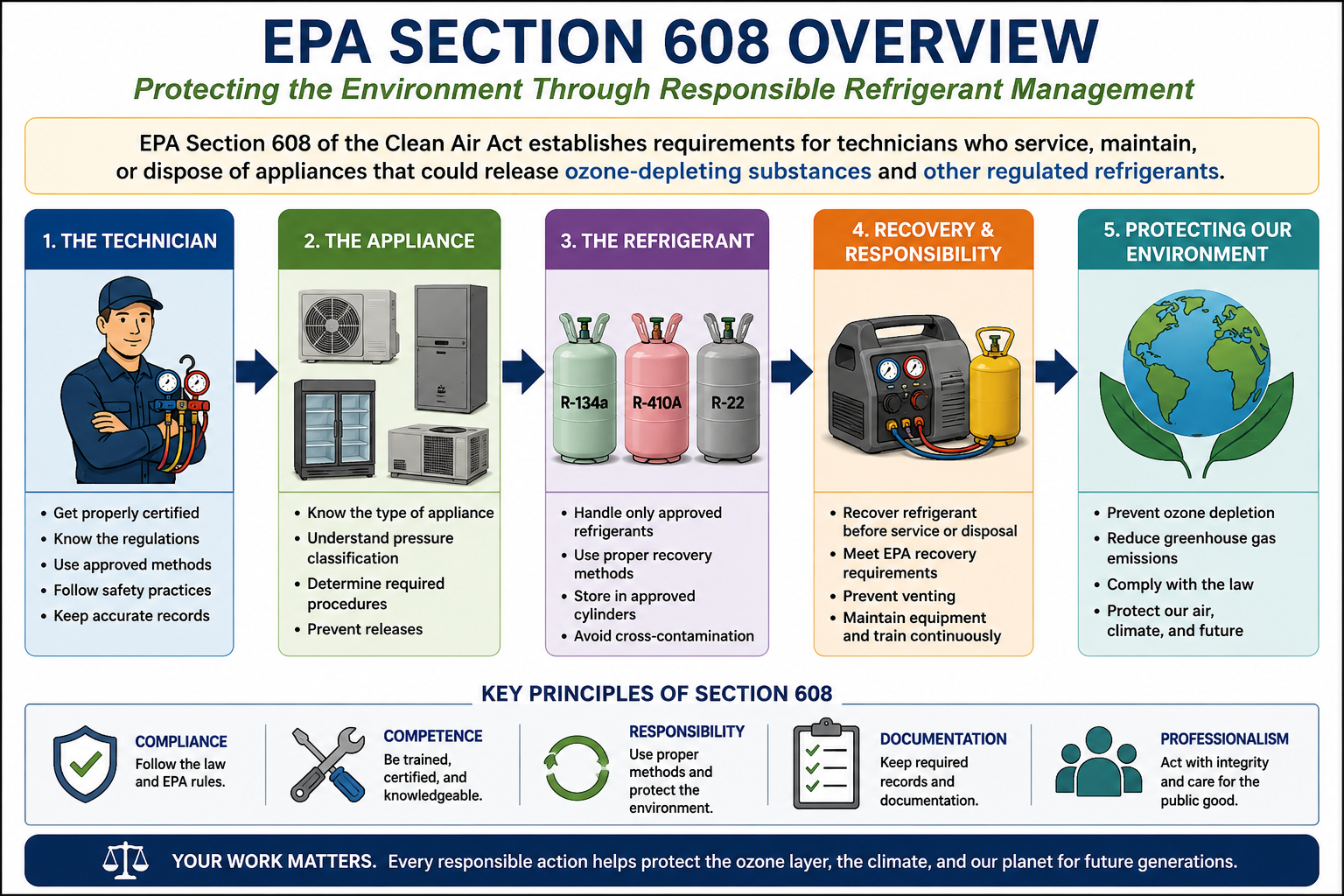
Section 608 of the Clean Air Act established requirements for managing refrigerants used in stationary refrigeration and air-conditioning equipment. The original environmental concern was the release of ozone-depleting refrigerants such as CFCs and HCFCs. The refrigerant-management requirements were later expanded to cover most substitute refrigerants as well.
For the technician, Section 608 affects everyday activities such as connecting gauges, adding refrigerant, recovering refrigerant, opening a refrigeration circuit for repair, selecting recovery equipment, purchasing refrigerant, repairing certain leaks, and preparing appliances for disposal.
EPA Uses a Specific Definition
Under Section 608, the word technician does not simply mean anyone employed in the HVAC/R trade. EPA uses the term for people whose maintenance, service, repair, or certain disposal activities could reasonably be expected to violate the integrity of a refrigerant circuit and release refrigerant.
Activities that can make a person a technician include attaching or detaching hoses and gauges, adding refrigerant, removing refrigerant, adding or removing components, and cutting into refrigerant piping. By contrast, work that does not disturb the refrigerant circuit—such as painting equipment or servicing an unrelated external electrical circuit—does not by itself make that person a refrigerant technician.
Connecting Gauges Counts
A technician does not have to replace a compressor or open a refrigerant line to perform regulated refrigerant work. Connecting and disconnecting service hoses or gauges can release refrigerant and is one of the activities covered by EPA’s technician definition.
Certification Is Based on the Equipment You Service
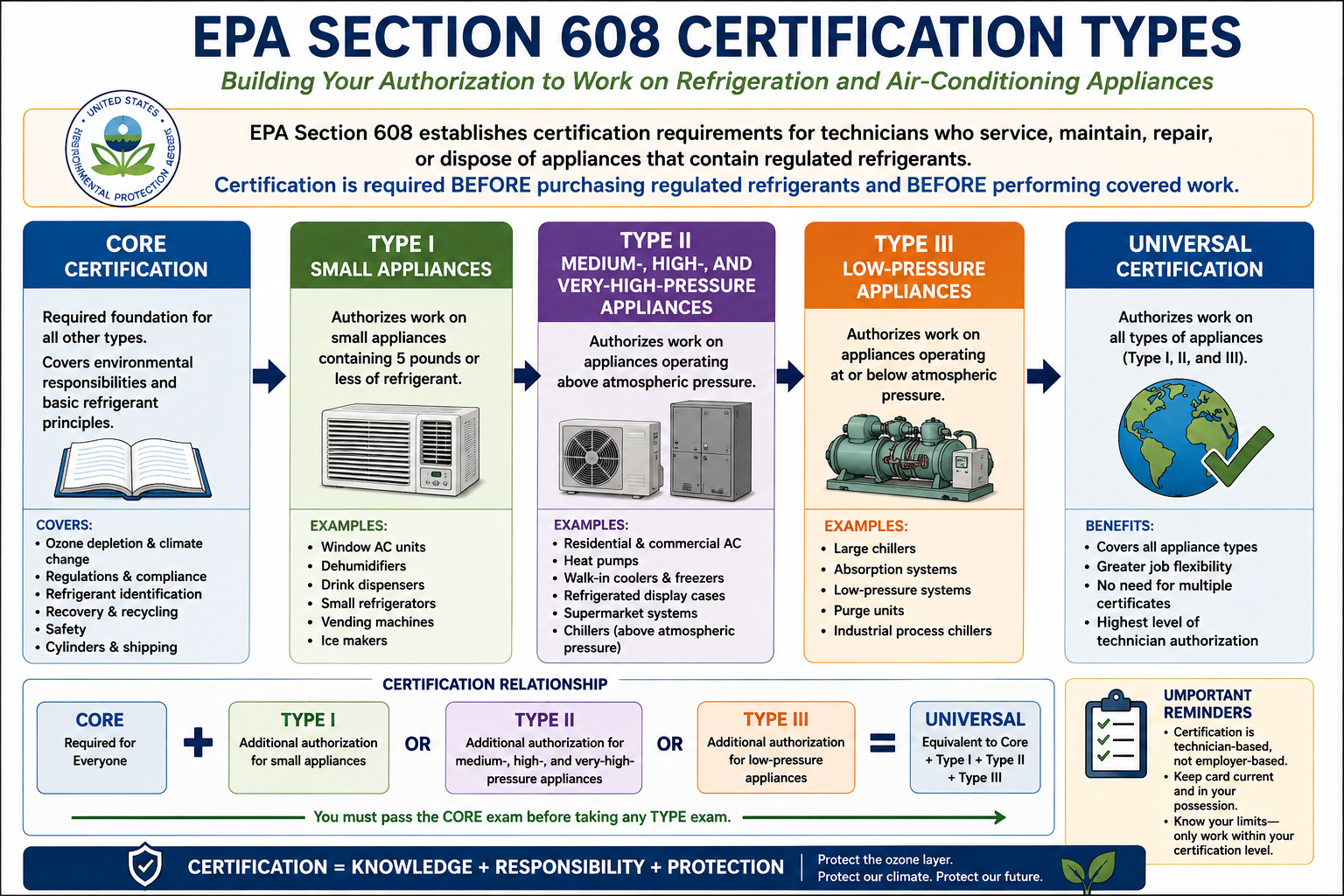
Technicians who perform covered refrigerant service must pass an EPA-approved Section 608 certification examination. The examination is divided into Core knowledge and equipment-specific certification categories.
EPA recognizes four technician certification types: Type I, Type II, Type III, and Universal. The correct certification depends on the type of appliance being serviced.
Type I
For servicing small appliances as defined by EPA.
Type II
For servicing or disposing of high-pressure and very-high-pressure appliances, except small appliances and motor vehicle air conditioners.
Type III
For servicing or disposing of low-pressure appliances, such as many centrifugal chillers.
Universal
For technicians who qualify to service equipment covered by Types I, II, and III.
Every Certification Begins With the Fundamentals
The Core portion of Section 608 certification covers knowledge that applies across refrigerant service work. This includes environmental effects of refrigerants, ozone depletion, refrigerant characteristics, recovery and recycling principles, safety, cylinders, shipping, dehydration, evacuation, and regulatory requirements.
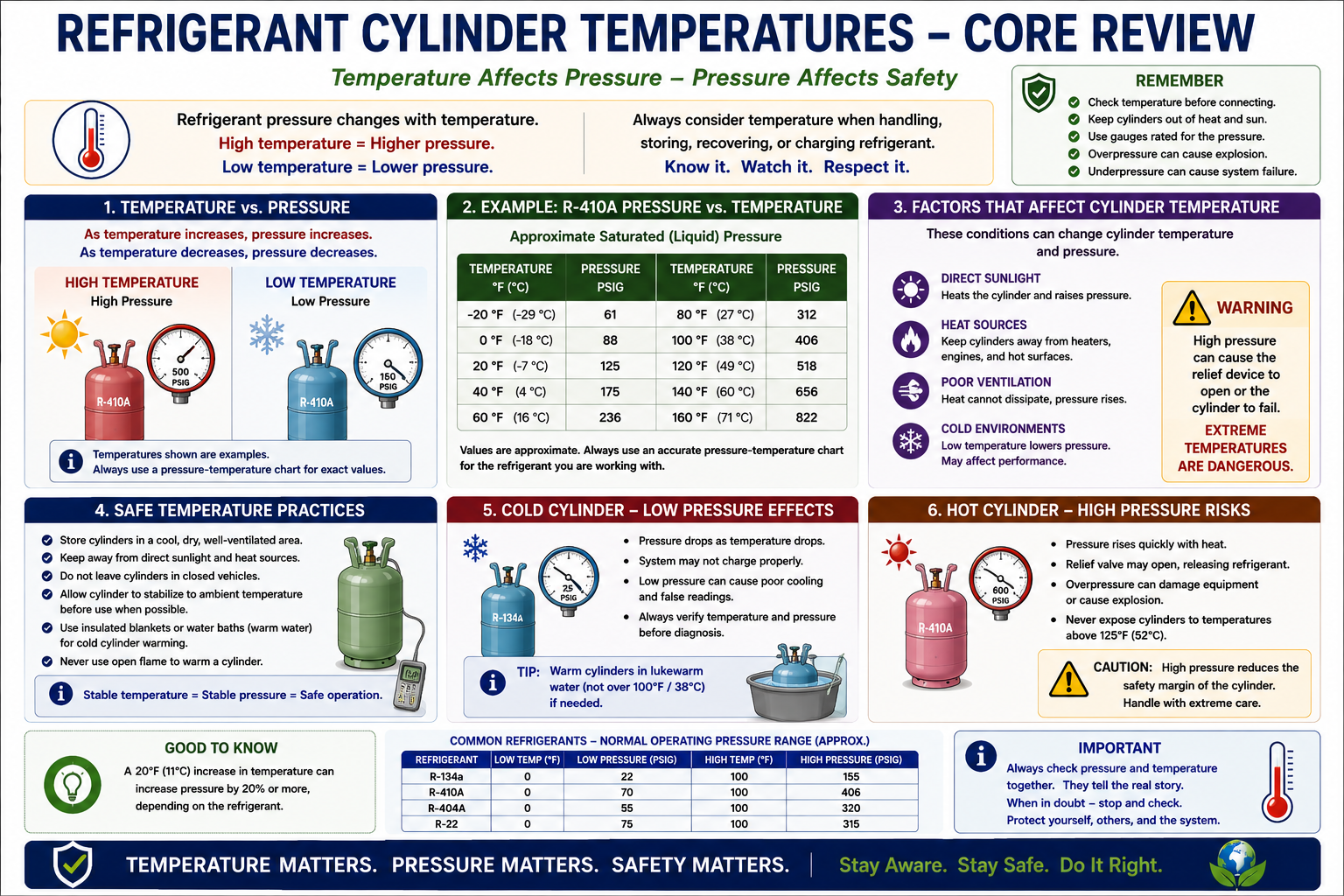
Understanding the Core material is important even after the examination. The same principles explain why technicians recover refrigerant, minimize emissions, identify refrigerants before servicing equipment, protect recovery cylinders from overfilling, and use appropriate personal protective equipment.
Learn the Principle, Not Just the Answer
Memorizing an examination answer may help on one question. Understanding why the answer is correct allows a technician to apply the same principle when the equipment, refrigerant, or service situation changes.
Section 608 Certification Is Permanent
EPA Section 608 technician certification credentials do not expire. Once a technician successfully earns the certification, EPA does not require periodic recertification.
That does not mean a technician’s regulatory knowledge can remain frozen at the date of the examination. Refrigerants, equipment, safety standards, and regulations continue to change. Professional technicians must continue learning even though the Section 608 credential itself does not expire.
Why Pressure Classification Matters
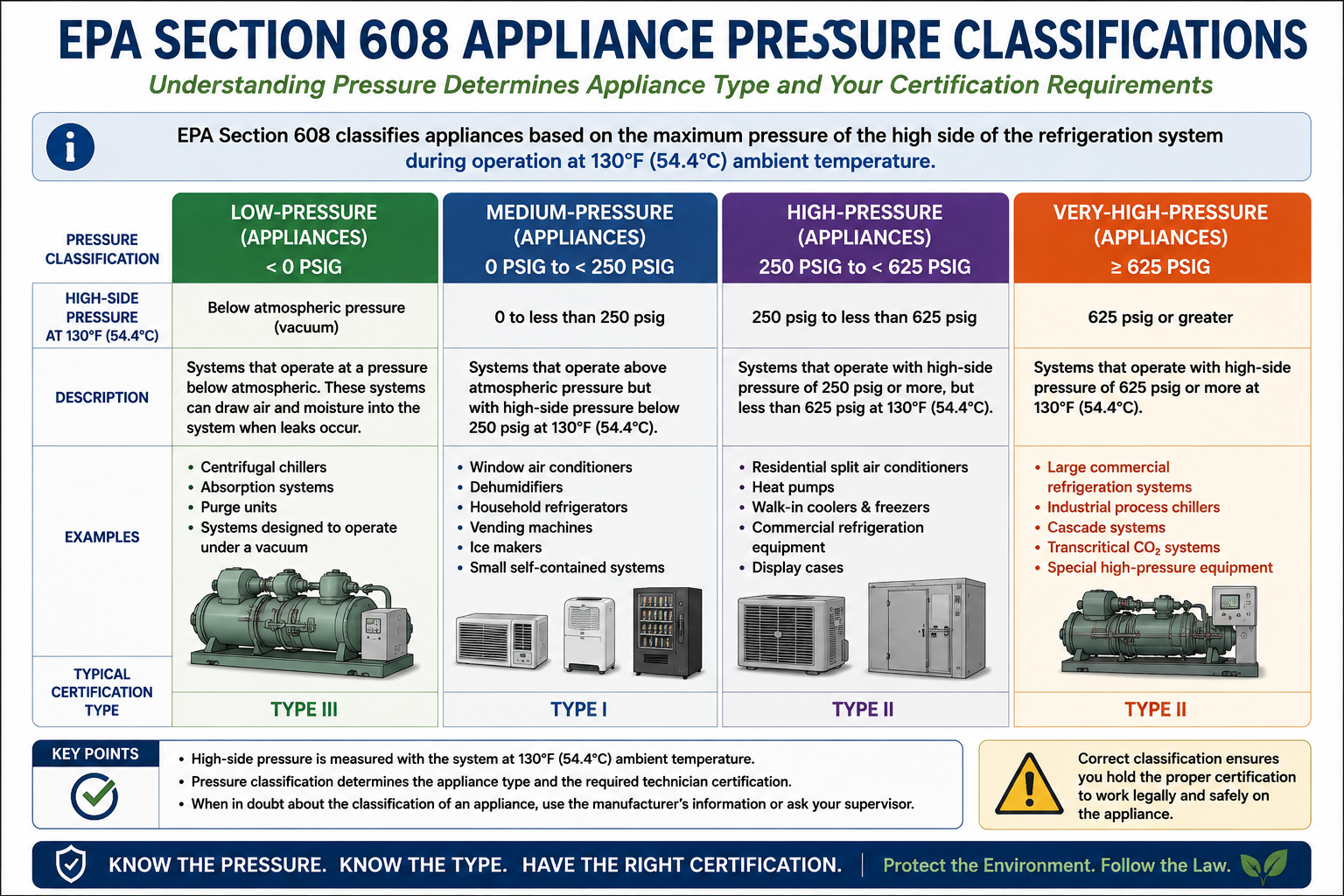
Section 608 requirements distinguish among several categories of refrigeration and air-conditioning equipment. One important distinction is the pressure category in which the appliance operates. Technicians encounter low-pressure, medium-pressure, high-pressure, and very-high-pressure refrigerants and appliances.
Pressure classification matters because refrigerants behave differently under service conditions and because recovery requirements can vary with the appliance category, refrigerant, equipment, and circumstances. A low-pressure centrifugal chiller presents very different service conditions from a residential split-system air conditioner.
Do Not Classify Equipment by Appearance
A large appliance is not necessarily low pressure, and a small appliance is not necessarily high pressure. Classification depends on the refrigerant and appliance characteristics, not simply physical size.
Small Appliances
EPA defines a small appliance as certain products that are fully manufactured, charged, and hermetically sealed in a factory with five pounds or less of refrigerant. Examples identified by EPA include refrigerators and freezers designed for home use, room air conditioners, packaged terminal air conditioners, packaged terminal heat pumps, dehumidifiers, under-the-counter ice makers, vending machines, and drinking water coolers.
Type I certification is specifically intended for technicians servicing these small appliances. Lesson 36 will examine the small-appliance definition and Type I recovery requirements in detail.
Five Pounds Alone Does Not Define a Small Appliance
The refrigerant charge limit is only part of EPA’s definition. The appliance must also fall within the covered product categories and be fully manufactured, charged, and hermetically sealed in a factory.
High- and Very-High-Pressure Appliances
Type II certification covers servicing or disposing of high-pressure and very-high-pressure appliances, except equipment specifically excluded from the Type II category such as small appliances and motor vehicle air conditioners.
This category includes much of the equipment encountered by HVAC/R service technicians, including many comfort-cooling and commercial refrigeration systems. Type II technicians must understand recovery requirements, service practices, leak-related regulations where applicable, and the hazards associated with higher-pressure refrigerants.
Low-Pressure Appliances
Type III certification covers low-pressure appliances. Large centrifugal chillers are common examples. These systems require a different way of thinking because portions of the refrigeration system may operate below atmospheric pressure.
Instead of refrigerant always leaking outward, a leak in a low-pressure system can allow air and moisture to enter the appliance. This is why purge units, leak detection, evacuation, and low-pressure recovery procedures receive special attention in Type III training.
Working Across All Section 608 Categories
A technician who successfully qualifies for Type I, Type II, and Type III certification is considered Universal. Universal certification is appropriate for technicians who may work across a broad range of stationary refrigeration and air-conditioning equipment.
Universal does not mean that every refrigeration-related activity is automatically covered by Section 608. Motor vehicle air-conditioning service, for example, has separate technician certification requirements under Section 609.
Stationary Equipment and Motor Vehicle Air Conditioning Are Not the Same Certification
Section 608 primarily governs stationary refrigeration and air-conditioning service, while Section 609 establishes separate requirements for technicians servicing motor vehicle air conditioners. The distinction is particularly important when discussing refrigerant purchasing and certification.
A technician should never assume that possessing one EPA certification automatically authorizes every type of refrigerant service. Always identify the equipment and determine which regulatory requirements apply.
Automotive A/C Is Not Type I
A motor vehicle air-conditioning system does not become a Type I small appliance merely because it contains five pounds or less of refrigerant. MVAC service is addressed separately under EPA Section 609.
Who Can Purchase Refrigerant?
EPA restricts the sale of ozone-depleting refrigerants and most substitute refrigerants. In general, refrigerant intended for stationary refrigeration and air-conditioning equipment may be purchased by Section 608 certified technicians or by qualifying employers or authorized representatives of employers that employ certified technicians.
The certification must also be appropriate to the equipment associated with the refrigerant purchase. EPA maintains separate provisions for refrigerants intended for motor vehicle air-conditioning service.
There Are Limited Exceptions
EPA regulations contain specific exceptions, including provisions involving certain small containers of substitute refrigerant intended for motor vehicle air-conditioning use. Do not turn a limited exception into a general rule that anyone may purchase refrigerant.
Refrigerant Is Not a Disposable Service Material
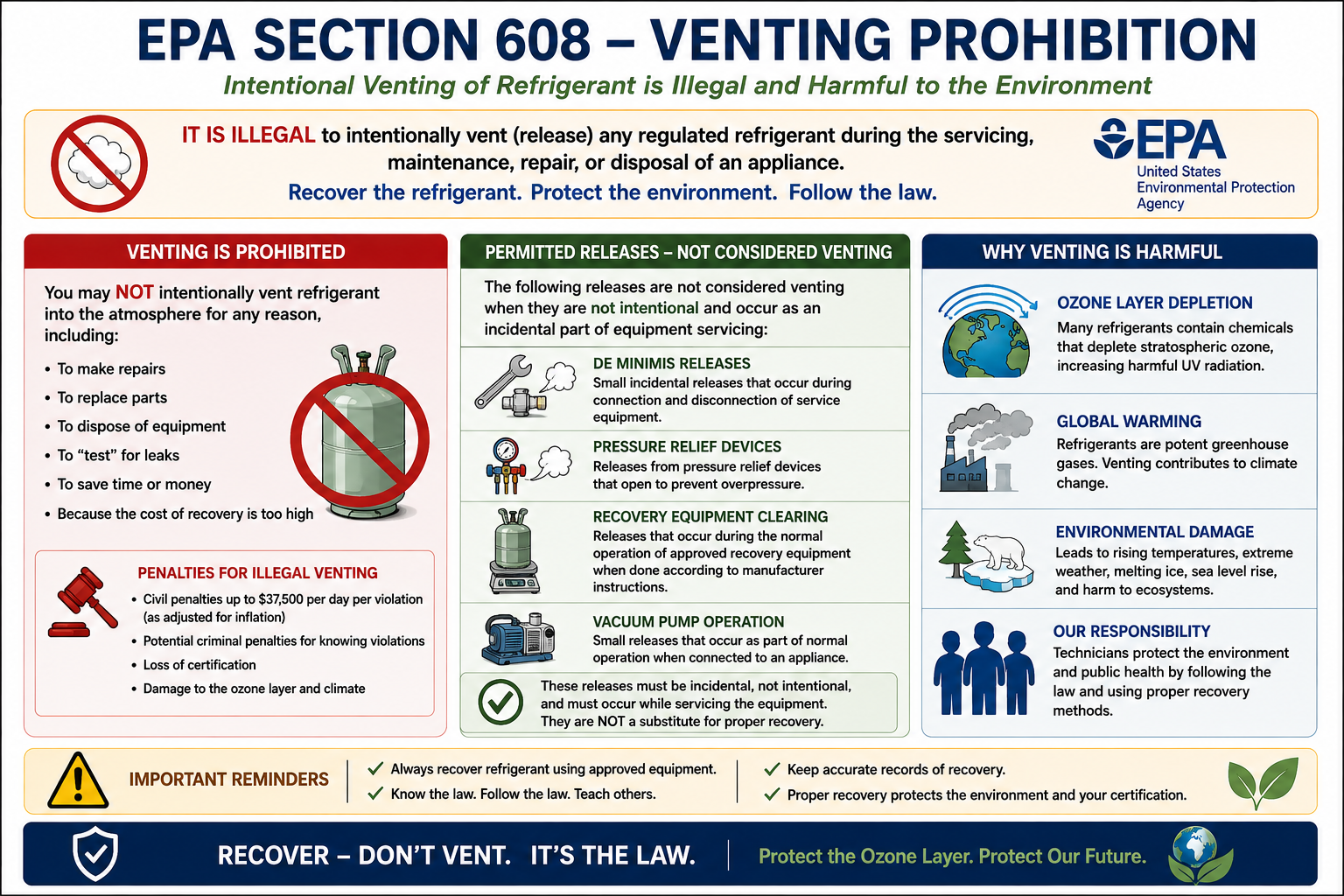
One of the central principles of Section 608 is that technicians must not intentionally release regulated refrigerants simply because recovery would take additional time or equipment. Refrigerant removed during service must be managed using appropriate recovery, recycling, or reclamation practices.
This principle changed HVAC/R service practices dramatically. Historically, technicians sometimes released refrigerant directly to the atmosphere during service. Modern refrigerant management treats the refrigerant as a material that must be contained and properly handled.
Do Not Interpret “No Venting” as “Zero Molecules May Ever Escape”
EPA regulations recognize certain releases associated with good-faith attempts to recover, recycle, or safely service equipment. That is very different from deliberately opening a valve, cutting a charged line, or otherwise releasing refrigerant instead of recovering it.
The Difference Between an Incidental Release and Intentional Venting
Small refrigerant releases can occur when technicians connect or disconnect hoses, clear service equipment, or perform other legitimate refrigerant-handling procedures. Section 608 does not require the physically impossible goal of capturing every molecule during service.
The important distinction is whether the release occurs while the technician is making a good-faith effort to recover and properly manage the refrigerant or whether refrigerant is intentionally released as a substitute for proper recovery.
Three Terms With Different Meanings
Part VI examined these concepts in detail, but they are fundamental to understanding Section 608. Recovery means removing refrigerant from an appliance and storing it in an external container without necessarily processing it. Recycling cleans recovered refrigerant for reuse through processes such as oil separation and filtering. Reclamation involves processing refrigerant to the required purity specification and verifying that purity using prescribed analytical methods.
These terms are not interchangeable. A technician using a recovery machine at a job site does not automatically produce reclaimed refrigerant.
Supervised Training Is Recognized
EPA provides an apprentice exemption from the technician certification requirement when the individual meets the applicable apprentice conditions and is closely and continually supervised by a properly certified technician.
The purpose is to allow legitimate hands-on training without treating an unsupervised, uncertified worker as a certified refrigerant technician.
Supervision Matters
The apprentice provision should not be interpreted as permission for an uncertified employee to independently perform regulated refrigerant service simply because a certified technician works for the same company.
Certification Establishes a Minimum Knowledge Standard
Refrigerants combine environmental, pressure, chemical, thermal, and sometimes flammability hazards. Improper service can release refrigerant, damage equipment, injure technicians, contaminate refrigerant supplies, or create conditions that are difficult and expensive to correct.
Section 608 certification establishes a common minimum knowledge standard. It does not replace equipment-specific training, manufacturer instructions, safe work practices, or good troubleshooting skills.
Environmental Responsibility
Prevent unnecessary refrigerant emissions and properly manage recovered refrigerant.
Technical Competence
Understand refrigerant behavior, recovery, evacuation, dehydration, charging, and service procedures.
Safety
Recognize pressure, temperature, toxicity, oxygen-displacement, and flammability hazards.
Regulatory Compliance
Know when certification, recovery, recordkeeping, refrigerant-management, and other requirements apply.
Identify the Equipment Before Applying the Rule
Many Section 608 examination questions become easier when approached in the same order a technician should approach an actual service call. First determine what equipment is being serviced. Then identify the refrigerant and appliance category. Only after those facts are known should you determine which certification, recovery requirement, or service procedure applies.
Identify the Appliance
Determine what kind of refrigeration or air-conditioning equipment is being serviced.
Identify the Refrigerant
Use the equipment nameplate, service information, and other reliable identification methods.
Determine the Category
Decide whether the equipment falls under Type I, Type II, Type III, Section 609, or another applicable category.
Apply the Requirement
Select the appropriate recovery equipment, service procedure, safety precautions, and regulatory requirements.
What You Need to Remember
- Section 608 is part of the Clean Air Act refrigerant-management framework.
- Technicians performing covered refrigerant service must obtain appropriate EPA Section 608 certification.
- Section 608 certification examinations must be provided through an EPA-approved certifying organization.
- Section 608 technician certification credentials do not expire.
- Type I covers small appliances.
- Type II covers high-pressure and very-high-pressure appliances except small appliances and MVACs.
- Type III covers low-pressure appliances.
- Universal represents qualification across Types I, II, and III.
- A small appliance must meet EPA’s complete definition; having five pounds or less of refrigerant alone does not automatically make equipment a small appliance.
- Connecting or disconnecting gauges and hoses is considered refrigerant-related technician activity.
- Refrigerant sales are restricted, with specific requirements and limited exceptions.
- Only Section 608 certified technicians may purchase refrigerants intended for stationary refrigeration and air-conditioning equipment under the technician-purchase provisions.
- Section 609 applies separately to motor vehicle air-conditioning service.
- Intentional venting of regulated refrigerants during service is prohibited.
- Limited releases associated with good-faith recovery and service are different from deliberately venting refrigerant.
- Recover, recycle, and reclaim have different regulatory meanings.
- Certification establishes a minimum standard; it does not replace manufacturer instructions or continued technical education.
Review Questions
1. What federal law provides the basis for EPA Section 608 refrigerant-management requirements?
Answer: The Clean Air Act.
2. What certification is intended for technicians servicing small appliances?
Answer: Type I.
3. What certification covers high-pressure and very-high-pressure appliances other than small appliances and MVACs?
Answer: Type II.
4. What certification covers low-pressure appliances?
Answer: Type III.
5. What does Universal certification represent?
Answer: Qualification to service equipment covered by Type I, Type II, and Type III Section 608 certification categories.
6. Does Section 608 technician certification expire?
Answer: No. EPA Section 608 technician certification credentials do not expire.
7. Does connecting gauges to a refrigeration system count as technician activity under Section 608?
Answer: Yes. Attaching or detaching hoses and gauges is among the activities that can disturb the refrigerant circuit and is included in EPA’s technician definition.
8. Does an appliance automatically qualify as a small appliance simply because it contains five pounds or less of refrigerant?
Answer: No. It must also meet the other elements of EPA’s small-appliance definition, including being within the covered product categories and being fully manufactured, charged, and hermetically sealed in a factory.
9. Is an automobile air-conditioning system a Type I small appliance if it contains less than five pounds of refrigerant?
Answer: No. Motor vehicle air-conditioning service is addressed separately under Section 609.
10. Can a Section 609 technician purchase refrigerant intended for stationary HVAC/R equipment solely on the basis of the Section 609 certification?
Answer: No. EPA states that refrigerant intended for stationary refrigeration and air-conditioning equipment requires Section 608 certification under the technician-purchase provisions.
11. Why does EPA distinguish between intentional venting and certain incidental releases?
Answer: Proper service and recovery can result in small unavoidable releases. Those releases are fundamentally different from intentionally releasing refrigerant instead of making a good-faith effort to recover and contain it.
12. Does recovering refrigerant automatically mean that it has been reclaimed?
Answer: No. Recovery simply removes refrigerant and stores it externally. Reclamation requires processing and verification to the applicable purity standard.
Lesson 34 Summary
- EPA Section 608 establishes refrigerant-management requirements for stationary refrigeration and air-conditioning service.
- Technicians who perform covered refrigerant service must obtain the appropriate Section 608 certification.
- Section 608 recognizes Type I, Type II, Type III, and Universal technician certifications.
- Type I applies to EPA-defined small appliances.
- Type II applies to high-pressure and very-high-pressure appliances except small appliances and MVACs.
- Type III applies to low-pressure appliances.
- Universal represents qualification across Types I, II, and III.
- Section 608 certification credentials do not expire.
- Connecting and disconnecting service hoses and gauges is refrigerant-related technician activity.
- Appliance and refrigerant identification should come before selecting a regulatory or service procedure.
- The five-pound refrigerant limit is only one part of EPA’s small-appliance definition.
- Motor vehicle air-conditioning service is addressed separately under Section 609.
- EPA restricts sales of ozone-depleting refrigerants and most substitute refrigerants.
- Refrigerant intended for stationary refrigeration and air-conditioning equipment requires appropriate Section 608 certification under the technician-purchase provisions.
- Intentional venting of regulated refrigerants during service is prohibited.
- Limited releases associated with good-faith recovery and service should not be confused with intentional venting.
- Recovery, recycling, and reclamation describe different refrigerant-management processes.
- Certification is the beginning of professional refrigerant knowledge, not the end of it.