All-Electric Package Units
An all-electric package unit uses the same basic packaged arrangement introduced in the previous lesson, but it does not use a gas-fired heating section. Cooling, air movement, controls, and any electric resistance heating are powered by electricity.
From the outside, an all-electric package unit may look very similar to a gas/electric package unit. The important differences are found in the heating method and the utilities required by the equipment. Learning to recognize those differences helps technicians identify the system before beginning installation, maintenance, or troubleshooting.
Learning Objectives
Recognize an All-Electric Package Unit
Identify the characteristics that distinguish an all-electric package unit from gas/electric packaged equipment.
Understand Electric Heating
Explain how electric resistance heating can provide heat without a gas burner, combustion heat exchanger, gas supply, or combustion exhaust.
Compare Package Configurations
Recognize which features are shared by gas/electric and all-electric package units and which features are different.
Distinguish Electric Heat From a Heat Pump
Understand that an electrically heated package air conditioner is not automatically a package heat pump.
The Packaged Arrangement Remains the Same
An all-electric package unit still belongs to the same basic equipment category introduced in the previous lessons. The major cooling, air-moving, and heating equipment is contained within one outdoor cabinet, and the unit connects to the conditioned building through supply and return ductwork.
The major difference is the source of heat. Instead of burning gas, an all-electric package air conditioner may use electric resistance heating elements to add heat to the building air.
The refrigeration system used for cooling still operates according to the same principles covered in The Basic Refrigeration Cycle. Changing the heating method does not change the fundamental refrigeration cycle used during air-conditioning operation.
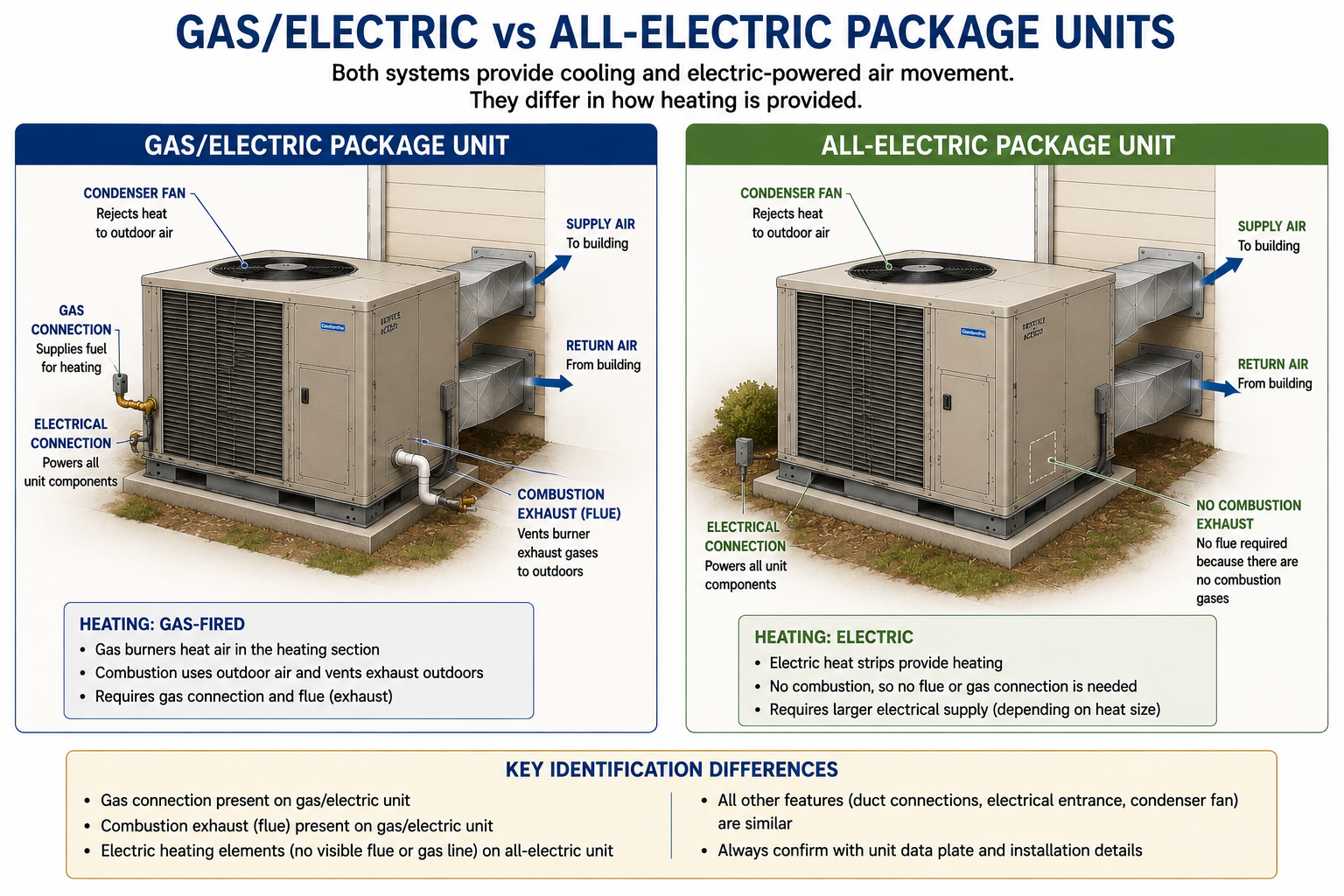
Electricity Is Converted Directly Into Heat
Electric resistance heating elements become hot when electrical current passes through them. The package-unit blower moves building air across the heating elements, where the air absorbs heat before entering the supply duct.
This arrangement eliminates the combustion process used in the gas/electric unit. There are no gas burners producing heat and no combustion products that must be vented from the heating section.
Return Air Enters
Air from the conditioned building returns to the packaged equipment through the return duct.
Air Is Heated
During electric heating operation, building air passes through the heating section and absorbs heat produced by the energized resistance elements.
Heated Air Is Supplied
The blower moves the heated air through the supply duct and back into the conditioned building.
No Combustion Process
Electric resistance heating does not burn fuel. Therefore, an all-electric resistance-heated package unit does not require the gas connection, burners, combustion heat exchanger, or combustion exhaust associated with a gas/electric package unit.
Many Parts of the Installation Look the Same
Because both systems use the packaged configuration, they share many characteristics. Both can be installed outdoors, both connect directly to the building duct system, and both contain the mechanical refrigeration equipment needed for cooling.
The heating section creates the most obvious difference between the two configurations.
| Characteristic | Gas/Electric Package | All-Electric Package |
|---|---|---|
| Cooling | Mechanical refrigeration | Mechanical refrigeration |
| Building Airflow | Supply and return ducts | Supply and return ducts |
| Heating Source | Gas combustion | Electric resistance heat in the configuration discussed here |
| Gas Connection | Required for gas heating | Not required |
| Combustion Exhaust | Required | Not required |
| Electrical Service | Required | Required and must support the electrical heating load when resistance heat is used |
| Field Refrigerant Line Set to Indoor Equipment | Normally no | Normally no |
Look Beyond the Cabinet
Two package units can have similar cabinet shapes and condenser sections even though they use different heating methods. Do not identify the heating method based only on the overall appearance of the cabinet.
Look for a Gas Supply
A gas line entering the equipment is a strong indication that the unit contains a gas-fired heating section.
Look for Combustion Venting
A gas/electric package unit requires provisions for combustion and exhaust. An electric resistance heating section does not produce combustion gases.
Check the Nameplate
The equipment nameplate and manufacturer information provide the reliable identification of the equipment model, electrical requirements, heating configuration, and other important specifications.
Check the Electrical Service
Electric resistance heat can represent a substantial electrical load, so the electrical requirements may provide another clue to the equipment configuration.
All-Electric Does Not Automatically Mean Heat Pump
The phrase all-electric describes the energy source used by the equipment, but it does not by itself tell you how the unit produces heat. One all-electric package unit may use electric resistance heating, while another packaged system may be a heat pump that uses reverse-cycle refrigeration for primary heating.
A package heat pump can also contain electric resistance elements for supplemental or auxiliary heat. The presence of electric heating elements therefore does not by itself determine whether the equipment is a straight-cooling package air conditioner or a heat pump.
Do Not Assume “Electric” Means “Heat Pump”
A package air conditioner with electric resistance heat and a package heat pump are different system configurations. Positive equipment identification should come from the nameplate, manufacturer information, controls, and the actual refrigeration-system design.
Heat pumps require additional components and operating sequences that are beyond the scope of this introductory system-configuration lesson. They should be studied separately so that heating operation, refrigerant-flow reversal, defrost, and auxiliary heat can be explained properly.
The Refrigeration System Has Not Changed
During cooling operation, an all-electric package air conditioner functions much like the gas/electric package unit studied in Lesson 2. Building air returns to the equipment, passes through the cooling section, and is delivered back to the building through the supply duct.
Outdoor air passes through the condenser section and carries rejected heat away from the refrigeration system. As with the gas/electric package unit, condenser airflow remains separate from the conditioned building airflow.
Avoid Relearning the Same Refrigeration Cycle
The compressor, condenser, metering device, and evaporator continue to perform the functions already covered elsewhere in this course. This lesson is concerned with how the equipment is configured, not with reteaching those components.
Avoid These Identification Mistakes
“All Package Units Use Gas Heat”
Incorrect. Packaged equipment can use several heating arrangements, including electric resistance heating.
“All-Electric Means Heat Pump”
Incorrect. An electrically heated package air conditioner may use resistance heat without using reverse-cycle refrigeration for heating.
“No Gas Line Means No Heat”
Incorrect. The equipment may provide electric resistance heat or may use another approved electric heating arrangement.
“The Cabinets Look the Same, So the Units Are the Same”
Incorrect. Similar-looking packaged equipment can contain different heating configurations. Confirm the equipment using its nameplate and manufacturer information.
Review Questions
1. What makes an all-electric package unit a packaged system?
Answer: The major cooling, heating, and air-moving equipment is contained within one cabinet rather than being divided between separate indoor and outdoor units.
2. How can an all-electric package air conditioner provide heat without burning fuel?
Answer: The configuration discussed in this lesson uses electric resistance heating elements. Electrical current heats the elements and the blower moves building air across them.
3. Does an electric resistance heating section require a combustion exhaust?
Answer: No. Electric resistance heating does not involve combustion and therefore does not produce combustion gases that require venting.
4. What major building-air connections are shared by gas/electric and all-electric package units?
Answer: Both normally connect to the building through supply and return ductwork.
5. Does all-electric automatically mean the equipment is a heat pump?
Answer: No. An all-electric package air conditioner can use electric resistance heat. A package heat pump uses reverse-cycle refrigeration as its primary heating method and may also include electric resistance supplemental heat.
6. Why should the equipment nameplate be checked instead of relying only on cabinet appearance?
Answer: Different package-unit configurations can have similar-looking cabinets. The nameplate and manufacturer information provide reliable identification of the model, electrical requirements, heating configuration, and other equipment specifications.
7. Is the basic refrigeration cycle different because the package unit uses electric heat?
Answer: No. During cooling operation, the same basic vapor-compression refrigeration principles apply.
Lesson 3 Summary
- An all-electric package unit places the major cooling, heating, and air-moving equipment within one outdoor cabinet.
- Supply and return ducts connect the packaged equipment to the conditioned building.
- The all-electric configuration discussed in this lesson uses electric resistance elements instead of gas combustion to provide heat.
- Electric resistance heating does not require a gas supply, burners, combustion heat exchanger, or combustion exhaust.
- Gas/electric and all-electric package units use the same basic mechanical refrigeration principles during cooling operation.
- The absence of a gas connection and combustion exhaust can help identify electrically heated equipment, but the nameplate and manufacturer information should always be checked.
- Electric resistance heating can create a substantial electrical load that must be accounted for in the equipment’s electrical supply.
- All-electric does not automatically mean heat pump.
- A package heat pump uses reverse-cycle refrigeration for heating and may also include electric resistance supplemental heat.
- Similar-looking package-unit cabinets can contain different heating configurations, so equipment should never be identified by appearance alone.